Your Guide to the Sexual Response Cycle
Medically Reviewed by Jennifer Robinson, MD on October 27, 2024. Written by WebMD Editorial Contributors on October 27, 2024
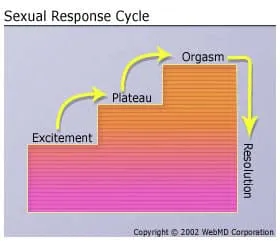
Understanding the Sexual Response Cycle
The sexual response cycle describes the physical and emotional changes that occur during sexual activity. Understanding these phases can enhance relationships and help identify potential sexual health concerns.
Both men and women experience four phases (excitement, plateau, orgasm, and resolution), though timing and intensity vary between individuals and genders.
Phase 1: Excitement
Physical changes (lasting minutes to hours):
• Increased muscle tension
• Accelerated heart rate and breathing
• Flushed skin and nipple erection
• Genital swelling (clitoris/labia or penile erection)
• Vaginal lubrication begins
• Breast fullness in women
• Testicular swelling in men
Phase 2: Plateau
Intensification of excitement phase changes:
• Darkening of vaginal walls
• Clitoral retraction (becomes highly sensitive)
• Testicular tightening in men
• Peak heart rate and blood pressure
• Possible muscle spasms in extremities
• Increased muscle tension throughout body
Phase 3: Orgasm
Climax characteristics (lasts seconds):
• Involuntary muscle contractions
• Peak physiological arousal (breathing, heart rate)
• Forceful release of sexual tension
Women:
- Vaginal and uterine contractions
Men:
- Rhythmic contractions leading to ejaculation
• Possible 'sex flush' over entire body
Phase 4: Resolution
Post-orgasm changes:
• Body returns to normal functioning
• Genitals return to pre-arousal state
• General sense of well-being and intimacy
Gender differences:
• Women: May experience multiple orgasms with continued stimulation
• Men: Require refractory period before next orgasm (duration increases with age)
Enhancing Sexual Experiences
Understanding these phases can help partners:
• Appreciate natural physiological differences
• Improve communication about preferences
• Identify potential sexual health concerns
• Create more satisfying intimate experiences
Remember that responses vary significantly between individuals and across different sexual encounters.