The Female Reproductive System
Medically Reviewed by Jabeen Begum, MD on December 13, 2024. Written by Katie Cameron on December 13, 2024
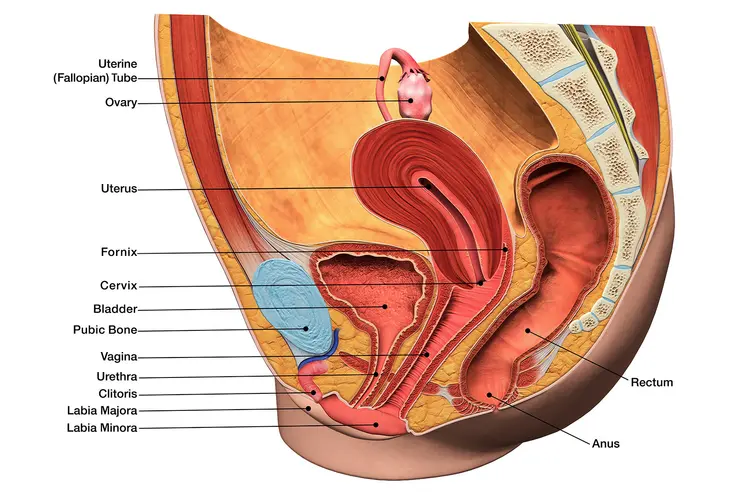
Overview of the Female Reproductive System
The female reproductive system performs several key functions:
• Produces egg cells (ova) for reproduction
• Transports ova to fertilization site (fallopian tubes)
• Supports conception and pregnancy
• Produces female sex hormones
• Sheds uterine lining during menstruation when pregnancy doesn't occur
External Reproductive Anatomy
Key external structures:
Labia majora:
- Outer protective 'lips' covered with hair after puberty
- Contains sweat and oil glands
Labia minora:
- Inner sensitive folds surrounding vaginal and urethral openings
Bartholin's glands:
- Produce mucus near vaginal opening
Clitoris:
- Highly sensitive erectile tissue
- Covered by prepuce (similar to penile foreskin)
Internal Reproductive Organs
Vagina:
- Birth canal connecting cervix to outside
Uterus:
- Pear-shaped organ for fetal development
- Divided into corpus (main body) and cervix
Ovaries:
- Produce eggs and hormones
- Contain 300,000 eggs at puberty (~500 ovulated in lifetime)
Fallopian tubes:
- Pathways for egg transport
- Site of fertilization
The Menstrual Cycle Phases
Average 28-day cycle with three phases:
Follicular Phase (Days 1-14):
- FSH stimulates follicle growth
- Estrogen rises, suppressing FSH
- One dominant follicle emerges
Ovulatory Phase (~Day 14):
- LH surge triggers egg release
- Cervical mucus changes to aid sperm
Luteal Phase (Days 15-28):
- Corpus luteum produces progesterone
- Uterine lining prepares for pregnancy
- Sheds if no fertilization occurs
Physical and Emotional Changes
Follicular:
- Increased energy and libido
Ovulation:
- Breast tenderness, mild cramps
- Peak fertility signs
Luteal:
- PMS symptoms (mood changes, bloating)
- Food cravings, anxiety
Menstruation:
- Fatigue, cramps, bloating
Reproductive Health Considerations
Common conditions:
- Endometriosis, PCOS, fibroids
- STIs and reproductive cancers
Fertility factors:
- Egg count declines with age
- Pregnancy risks increase after 35
Protection:
- Avoid toxins (smoking, heavy metals)
- Regular gynecological checkups
Key Takeaways
• System prepares monthly for potential pregnancy
• Cycle typically lasts 28 days until menopause
• Understanding your cycle helps recognize abnormalities
• Reproductive health affects overall wellbeing
• Regular exams help detect issues early