Optimize Muscle Growth with these Scientifically Proven Tips ft. Dr. Allan Bacon
Created by:Dr.
|
Published:January 15, 2024
|
Last updated:
|
Views:3624+
|
Medically Reviewed
Reviewed by Dr. , MBBS, MD on .
Next review due: November 2026
Fact-CheckedEvidence-BasedTranscript AvailableClosed Captions AvailableScreen Reader Friendly
, 0+ Exp
Book Consultation

Consult With Loading...
Trust & Security
Verified Medical Content
All content reviewed by licensed doctors
Secure & Private
HTTPS encryption & privacy protection
Evidence-Based
Based on peer-reviewed research
Medical References
This video content is based on current medical evidence and guidelines from authoritative sources:
- 1.World Health Organization (WHO) - Global Health GuidelinesView Source
- 2.Centers for Disease Control and Prevention (CDC) - Evidence-Based GuidelinesView Source
- 3.National Health Service (NHS) - Clinical StandardsView Source
- 4.Peer-Reviewed Medical Journals - Latest Research & Clinical Studies(The Lancet, JAMA, NEJM, BMJ)
Last updated:
Transcript
indecision will kick in so incredibly when you are constantly questioning yourself you know if you're hyperfocused on the fearmongering it essentially stalls you from taking those steps that are necessary to do anything do what you want to get better at so go thrust essentially we're prescribing people to go have sex which is a great thing the average person is about five reps away from failure when they think they're at failure the longer that you go in The Eccentric yes it makes you more sore soreness is not an indicator of muscle growth if you take loaded movements to end ranges of motion it increases flexibility at the same extent as a dedicated stretching routine I mean it's amazing what neat accounts for and I don't think that people realize that I mean neat for those who are not familiar with it non- exercise activity thermogenesis which is basically a fancy way to say all the movement that we do that's not dedicated exercise rather than starving yourself to death where you're going to lose lean muscle if you're doing all these insane fasting protocols you could be in a calorie deficit to lose excess body fat and you can exercise and still maximize the benefits of autophagy are you tired of trying your best to lose weight or gain muscle and not seeing any success well then this episode is for you welcome back to the Reena Malik MD podcast I'm your host Dr Reena Malik urologist and pelvic surgeon today our guest is Dr Allan bacon an oral surgeon turned certified bodybuilding coach powerlifting Co coach and certified nutritionist who today joins us to talk all about evidence-based information about exercise and nutrition we talked about how to exercise to get better at sex we also covered what are the characteristics of people who are successful in maintaining reaching their goals of weight loss or muscular hypertrophy we got into the nitty-gritty about resistance training we talked about reps we talked about going to failure time under tension as well as rest periods we also discussed nutrition what are the big myths about nutrition do metabolic types matter how do hormones affect nutrition and what is the optimal amount of protein we even covered how to maintain motivation while you're on this journey of improving your muscular health and weight let's get right to it Dr bacon welcome to the podcast thank you for having me on Reena I'm so excited to meet you um I know our good friend Gabriel l ined uced us and um she only introduces me to people who she really believes are amazing so I have high expectations yeah I mean she's she's one of those people in the industry that really kind of helps to push it Forward right because she um she facilitates these types of things and it's great to be able to both meet like-minded people and people that are that are really intelligent to be able to get this type of information out there so I do appreciate that and I appreciate you letting me on of course so I think a lot of people don't know this about you but you used to be an oral surgeon before you got into Fitness and Nutrition yeah I had a doctorate in dental surgery and I practiced for 10 years it's a very rewarding type of training and type of Lifestyle but um through various changes that happened in life I had a switch in career I had a father who ended up getting esophageal cancer and he had uh practiced dental surgery for 10 years or 35 years actually I remember having a conversation with him towards the end and I asked you know what is there things about you know your life that you would have done differently and one of the things that he had mentioned was he wished that he would have spent more time with his family he wished that he would have spent more time taking care of himself and that really struck a cord with me and at the same time I was doing surgery December 24th 8:00 p.m. missing out on Christmas Eve dinner with the in-laws and uh and I I just had a kind of you know come to come to myself most where I talked to my wife and I said hey look you know we've been in Fitness and and nutrition helping our friends helping people that we know for years now how about starting a side business where we do this professionally and she was an Olympic weightlifter she had an American record holding competition where she she earned that in uh 2019 where she went to Worlds and so it was both it was up both of our alleys and we got into it as a secondary type of business and then it ended up taking off and I find that being able to help so many people take control of their life and take control of their nutrition is something that was really passionate for me and so the change was was welcome and it gave me a decent quality of life able to move to Hawaii and can't complain about anything anything from there it's uh one I commend you for it because you know I've obviously made a change in my career in terms of leaving academic medicine to come and live in California I still work at the Veterans Affairs hospital but I have my own practice ice I do the podcast and the YouTube channel and it is a huge change to go from the mindset of being you know a surgeon who operates all the time who has dedicated you know 10 plus years in training to get to that point and to then you know to say you know what I'm going to take a step back and do something that will affect many more people in a positive way but it is it is really hard because you be begin to identify as that person who who did that you do you do and one of the really nice things about this shift that both you and I have made is that you start to move towards that side of the equation where you're preventing disease you know it was great treating and you would see so many patients and they would be very thankful of you getting them out of that those situations but I really like the idea of stopping it before it gets there and it's not that there aren't people out there that are doing it it's that the recommendations are becoming muddled and there is so much noise out there that we need some people to be able to cut through that noise to actually make a difference in people's lives and hopefully these types of podcasts these types of conversations can can actually do that long term for people absolutely and you know I think that's the challenge now with the Tik toks and the the really misinformed but zingy content that people gravitate to and they just take like a small portion of that with them they're like oh I can eat um I saw one that was like you can have coconut oil and it's like negative calories and you'll like it was just so ridiculous it didn't make any sense but I could see someone be like oh I saw that look I'm I'm eating healthy I'm doing great why am I not losing weight or why am I not you know reaching my goals and so yeah absolutely the same reason is is why I decided to do things on social media was to really just give evidence-based content and education that is really based in some science rather than sort of made up or um extrapolated in the wrong away from small data sets that are not really uh accurate in in the bigger scheme of things well I mean the problem there is that hyperbolic content sells hyperbolic content sells to people hyperbolic content sells to the algorithms of these social media sites it's almost like the tried andrue isn't sexy and because the tried and- true isn't sexy it doesn't grasp people's emotions yeah and so we have all of these very Fringe recommendations taking the Forefront because they're new and because they they seem exciting and if it's something that you haven't tried before if it's something that you know you're you're getting all this word of mouth it seems like hey maybe that's the secret and maybe that's why I didn't get to where I needed to be years ago maybe that's why I've been on this diet roller coaster for my entire life and this misinformation I I think that in a lot of cases isn't meant to be in in a nefarious manner it's not meant to trick people I think that even the people putting this stuff out don't really realize okay maybe the message that I'm putting out there isn't really what we should be focusing on and so what I've noticed with social media is that instead of actually making the important choices and focusing on what we should be doing to really make a difference in our health we are focusing on the most base minutia that you can possibly find out there because it just sounds sexy or it just sounds new or really interesting and so this this push for let's master the basics let's really understand how our body works let's really understand how food affects it let's really understand how um you know training and exercise affects it and then push those forward and the idea of mastering the basics if we can start to value that we're going to actually make a major difference instead of trying to focus on you know how much time should I be staying in a cold bath or you know should I be avoiding these oils or should I be avoiding you know what are all these different things that maybe have an effect but are probably far less of the equation than what we should really be focusing on I think just we're just drawing attention away from those really important things absolutely you got to sort of optimize the pillars before you can deal with the Fringe yep and you know you probably like me because we don't learn nutrition and exercise in medical school or dental school um had to learn it on your own so tell me about some of the struggles you had in learning it things that maybe misinformation that you felt victim to and how you sort of figured your way out of that so the issue with with the information out there is that there's so much right and the best thing that a person can possibly do to further their education in the best way possible is to find some reputable sources online and I what I mean by reputable sources is not necessarily cert certifications or or you know institutions but actual researchers in the field or doctors in the field that really have specialized in this for a long period of time to distinguish whether or not you're getting good information from bad because you will see certainly multiple types of people on different sides of issues the best thing that you can possibly do is hopefully get into conversations with them because a lot of them are very willing to do back and forths myself included and if there is a contentious topic one of the best things that you can do is you can say hey can you explain your side of the topic to me that's perfect because most people are really willing to do that if you've got peer-reviewed research even better because you've got some backing to be able to show why you believe the way you believe when you get a person that really understands a topic they not only tell you that side of the equation but they can explain to you the other side what the other person who disagrees with them is saying they can explain their stance and then they can can explain why that is probably not accurate or why that might not be accurate under the circumstances that you're discussing and if they can explain the other side of the equation or the other side of the argument that's where you'll really get some insight into what might actually be going on so it's difficult in you know this sea of noise to really identify what's going on but I think that the best thing that you can possibly do is have those conversations get both sides and then make the best decision for yourself once you have the the full view of the answer and the way that I like to give an analogy for this if information is everything in a room the issue that we have on social media is social media expert a or Fitness influencer it's even worse with Fitness influencers Fitness influencer a will open up the door and they'll take a tiny flashlight and they'll point it into one corner and they'll say that's the answer and you'll say okay cool I can see that but then somebody who actually knows what's really going on will be like whoa hold up look turn the corner turn the light on in the entire room and then you see everything and you see that that one piece of information may not be relevant for you or under your situation or it may be only relevant under certain specific scenarios and so by a by being able to see everything from a thousand foot view you get a much better idea of what's actually going on and I think that that's the distinction that we need to start to look at because I think that people are getting hyperfocused on that flashlight view of an issue without really understanding what's fully going on and I think the other issue is that people get stressed by that little issue right like for example um I need to avoid seed oils right here we go and and so I need to avoid seed oils but I go out to the restaurant and everything's made with seed oils or I go to buy some food that is convenient for me to take with me when I'm on traveling or I have a busy day and it's all made with seed oils now I'm stressed because what am I going to eat to what am I going to cook when do I have time to cook and I'm going to bring that with me when I go out with my friends like it adds all these layers of stress to your life when in reality like that is a small portion of the equation and a misinformed one at that let's back up and then ask the person okay well then what do they do indecision will kick in so incredibly when you are constantly questioning yourself and if you're hyperfocusing on these little things that don't necessarily matter and we can get into the specifics about this if if you really want to but you know if you're hyperfocused on the fear-mongering it essentially stalls you from taking those steps that are necessary to do anything you know and in situations like you're talking about when like traveling is a really important one that a lot of people deal with if a person's traveling and they're trying to do the best that they can and this is where I always tell people it's the all or something mentality not the All or Nothing mentality mhm if we say this food is bad Always Forever and it's the only option in comparison to that food you know maybe you get some seed oils in a in a nice salad it's not going to take you over in a you know calorie Surplus it's not fried it's not you know problematic in any way and you're avoiding that because you were told the seed oils are bad and now your only other option is fried chicken like how does that make you feel mentally and emotionally I mean it's going to make you feel like you're failing at this attempt of becoming a healthy person when in reality if we were focusing on what really mattered anyways you'd say okay I'm going to do the best that I can in this situation technically there's nothing wrong with the situation that we posited with a you know a seed oil and a a regular calorie allotment and you know not in a super high heat cooking environment it's not going to really cause a problem but they've been led to believe that this is always a bad thing and unfortunately it really affects people mentally and causes you know procrastination or just stalls them out completely absolutely and you know I'm a busy person you can relate to this I'm sure but like I go to work I need food that is some days I just don't even have time to have lunch right so I need something that will fuel me for the day and sometimes that might be a protein bar sometimes that might be a protein shake these are processed foods right they are not perfect by all means I will admit that but you know what it's quick it's easy I don't have to spend a lot of time preparing for my day I can move I can have that time allotted to stress for other things I got to deal with right like the patient in front of me who I have to take care of or the operation I'm doing that day and so I think that that's like if something is convenient and not terribly bad for you and makes your life easier and reduces your stress there is value in that and particularly if it allows you to maintain a more consistent adherent diet to whole minimally processed foods right and I'm not somebody that's going to come out here and say you know all processed foods are bad because the real situation is that you have to look at the level of processing how frequently you're eating it how much you're eating it this all adds in now I don't think that anybody can argue that whole minimally processed foods are the basis of a diet that's just the way that it is whole processed foods have a lot of benefits that ultr processed foods in particular don't provide there's a lot of issues with ultra processed foods but there's certainly some room in a diet for them particularly if they increase your adherence and consistency with your whole minimally processed foods and this is where people are really kind of Jumping the Shark because they're ignoring the benefits that some of these things can bring that some of these Ultra processed foods can bring in a real everyday lifestyle you know you've got that mother of two kids that's working two jobs and should she be eating home minimally processed foods the majority of the time yes she should and you should plan accordingly there's times that that just doesn't work out and so maybe we have some more processed foods in play because getting some nutrition is in is important it cuts stress down it allows her to spend some time actually cooking more food to prep for the rest of the week and that's just what she could get in at that time and this idea of completely vilifying things as black and white good and bad is probably doing ourselves a disservice because what we're doing is we're scaring people away from actually succeeding yeah and I think you bring up a good point about the the wife or the mother with two kids at home that's not your influencer right your influencer is usually especially if they're quite popular has a disposable income has time to either hire someone to cook their food for them or it's it's a 30-year-old kid that just got out of college doesn't have any debt and you know is making enough money to be able to do this full-time right and that's not everybody yeah and so there's there is certainly an ideal right and and the ideal is we eat all whole minimally processed foods we get a good omnivores style diet no restrictive diets they are not the best idea for an overall healthy person you know restriction just you miss out on too many good things if carnivore has problems veganism has problems from these perspectives from a from an overall nutrient standpoint intake and if we can realize that there's an ideal but maybe that's not what life is like all the time then we can start to give ourselves some Grace in the way that we actually do eat and start to succeed by you know actually feeling motivated by the successes that we have yeah let's talk about motivation so when you have a client right and and the the client who's probably probably tried and failed many times to achieve either gains in the with muscular hypertrophy or weight loss right they've tried and maybe they haven't achieved their ideal goal or they've failed what are sort of green flags like things that you look at your client like they are definitely going to succeed because they have these characteristics there's multiple things that I would say are necessary to be the the best coachable person and you want to be coachable if you're going to be working with somebody and and see a good chance for Success one of them is going to be you're going to have to be open to learning you know and there's certain people that I don't know if you work with people with Fitness and Nutrition all the time but there's a lot of people that will come in and you'll say hey look this is a good change that we can make this is a good change and they're like no I'm not doing that you're like okay this is you're not going to change from where you are unless you make some alterations in what you're doing the second thing and most important thing that I find for people that want to make these changes is to accept some responsibility for where you are now having said that that can be a very aggressive thing for many people to experience that doesn't mean that you're being judged that doesn't mean that you deserve to be judged that means what you've done in the past hasn't worked and so by realizing that there are habits and routines in your life that aren't fulfilling your goals and your needs it's the first step to learning how to adjust and actually overcome them and so people will look at taking responsibility as a bad thing because it can it can make us feel less competent it can make it feel like people are blaming us but I think that it's necessary for people to succeed because if you accept the fact that some of this and maybe even all of it is your fault then that's okay it doesn't mean that you are a failure it means that you face challenges so how can we learn about this how can we overcome these challenges and if we accept it as a learning experience that's where we really start to grow because there's not a single person that has gone on one of these weight loss Journeys and hasn't screwed up and has screwed up a lot and I always tell clients when they start working with me I'm like you're going to screw up and they're like what I'm like you're going to screw up a lot you're going to screw up all the time so let's have a conversation about what would you want me to tell you to bring you back onto you know the right path and this is something that a coach can ask you but I I will emphasize for anybody that's going on this journey ask yourself this and then write it down because it's going to be just as valuable for you to check back into this it would be for you to ask a third person to just reiterate this to you yeah and if you're thinking about it outside of the situation where you're having a pity party and everything's down and oh my God you gained three pounds the past two weeks I mean and it's going to come up because Christmas and New Year's is happening here and chances are you're probably going to gain a pound and so people will will wait until they're in an emotional crisis before attempting to address this type of thing but I want people to look at this beforehand because if you do that you're going to set yourself up for success because it can take you out of that emotional spiral yeah and you can say hey look I said that this is what would bring me back to my goals and what is really important to me because there's a reason that you're doing this and so reminding yourself of what that reason is reminding yourself that you knew that you were going to screw up at some point and then reminding yourself that you have some strategies to overcome it will be a very powerful thing and if you start to look at it as not only a learning experience but the fact that you face a challenge and you keep going as a sign of resilience then you can spin this into a positive outlook on what you're experiencing because again no there's not anybody out there that's that doesn't fail absolutely and so if we start to look at this as hey this is part for the course and things are essentially going as intended or or what you would expect it's okay and it's hard uh I I mean we've all been there I think the other thing to realize is when you are at that stage of like you failed everyone has sort of a different way that gets them motivated so like my husband will be like I need David gogin to like yell at me basically like that's what I need like someone to just tell me to stop being a and get up and move and like do the things and whereas I need have you ever said that to the wrong person be pissed I did once well when I first started I did once and I was like hey it's time to suck it up and they're like what and I'm like okay let's take a step back and we we'll reevaluate and this is the type of thing that you learn you know as you work with more and more people and you you see this too in medical right you know you learn how to talk with different people in medical and there were some people that if you were just blunt with them in sarcastic it actually relieved their nerves and I remember going into you know wisdom teeth extractions and and you know lefort osteotomies and stuff like that and whenever you did that people would understandably be very nervous and there were some people that you could just be like hey don't be a yeah and they would respond very well because it would it would be levity for them it would break it would break the tension right then you say it to other people and it's the worst thing in the world that you can say so you know figure out what works for you you're exactly right and push forward with that type of thing and once you figure that out you can use that right like you can listen to David goggin on a podcast or you can you know whatever it is but I think that's that's super important and and I think you bring up that consistency is so important we're all going to fail we're all going to gain weight and lose weight and gain weight and lose weight whether it's a lot of weight or a little weight it's going to be variable right but I think the the key is like yeah building that resiliency and like you build it in a variety of different ways in life so I'm a physician you're you're you were a dentist like you a neural surgeon you you learn resiliency in one category right like I I can stay up and work and take care of patients on less sleep than most people and I can make really complex decisions but I may not be good at another area of my life and that's okay right but like it's all building to overall becoming better in a variety of things and that's why people say like if you start focusing on let's say weight loss just one thing you'll notice it sort of spreads through your whole life whereas other things will also improve and so I think it's just great to to say like yeah be consistent and keep working at it and you'll get there yeah and particularly with Fitness and Nutrition you bring up a good point there where you talk about weight loss versus some of the other things that we do let's say that you go into a situation and I talk about this all the time with people when we start to get in around Halloween and then start to move in through the holiday season because the reality is that probably only about 50% of people can really stick to a fat loss program through this time of year but that's okay because unfortunately I think that many people who try to lose body figh think that's their ultimate goal I think that they spend too much time doing it and so they grind against fat loss for like 6 months and then they they go off the rails for two or three months and they grind against fat loss for like another six months and they don't value that time where they might have more fuel in their system to actually build some lean muscle that will get them to where that they wanted to be this entire time and so switching mentality and seeing the benefits that you can have in all of these different seasons of life no matter what your goals are this is just a specific example for Fitness and Nutrition but if you're going to be having more calories in your diet and you're going to say Hey look it's probably unrealistic that I'm going to continue to lose significant amounts of body fat I'm probably not going to see the scale drop a whole lot say okay well how about I make my life a lot easier and say let's G let's switch um focus to building some lean muscle for the next few months then you relieve that stress of seeing the scale drop every 5 Seconds you start to Value performance and health you are not ignoring your ultimate goals if they are to be leaner but you're taking it in different stages and honestly you know with things like building lean muscle it's it's only going to help you lose body fat later and build your confidence in some other areas and improve your overall health right longevity I mean and this is one of the things that I wanted to get into today when we were we were discussing some of the topics to talk about but having more lean muscle and muscle mass is one of the best predictors of longevity and health that there possibly is I mean lean muscle is inversely and independently associated with longevity and health even when you factor out things like cardiorespiratory fitness body fat age the total amount of um smoking that a person does like all of these different things we can factor out and having more lean muscle and strength is a major benefit to longevity and health yeah and it's funny it's funny because if you look at something like muscle mass index muscle mass index is one of the best predictors that we have of longevity and health barnon and it is much more accurate than something like BMI which we've used for decades and as as doctors this is not to get down on BMI because BMI has a very real purpose as a general screening tool and it works fine but if we're going to be talking about maximizing longevity Health injury risk reduction um our ability to handle metabolic disturbances muscle mass index is probably much more relevant yes I completely agree how does the average person estimate their muscle mass index you would have to get a um a CT scan you would have to get it done by a doctor and then it would be estimated for you but you would you would ask your doctor hey I would like a muscle mass index scan and it would do a CT and typically what they'll do is a um a CT scan either of multiple parts of your body or just of your abdomen area and then do an equation to to predict where you are with that what about the sort of using a dexa scan or those inbody type type machines to help estimate your muscle mass so dexa scans are okay I mean both of those are much less accurate than doing something like a CTR an MRI dexa scans are okay they have an an average error rate of about 3 to 4% and so the I get really hesitant when a a client of mine comes up and they say hey I want to get dexa scans or I want to get inbody scans I get super hesitant with inbody scans and I'll explain that in a minute but dexa scans I get hesitant because if they have an error of 3 to 4% and it goes in both directions m mhm so you could be 20% body fat and the Dexter scan could say you're 23 or it could say that you're 17 and so a person could get it they could be actually at 20% but it'll say 19 so it's oneof you come back the next time and you're at 19 but it says 20 and you could be at something lower you know you're lower than what it shows so the issue with it is that if you're trying to use it as a marker of change over time it's not the best marker because those errors are not standardized and so people will say oh well if it's got a three or 4% error I'll just figure out what it was and then I'll just keep looking at subsequent you know drawings and then it'll be okay but it doesn't actually work that way since each error is different each time that you come in it just is within that range and so for dexa it is fine and it's relatively accurate and it's the reason that we use it as a gold standard in research because it's relatively accurate but for people that are attempting to do it it is a very good idea not to take dexa scans sooner than every four to 6 months preferably the longer that you can go out the better and you probably can't tell if anything is actually happening until you've maybe lost 3% body fat because that's outside of that margin of error right out at the margin of error so until that happens you don't really know what's going on with the numbers that you're given inbody is even worse it's up to 8% and in some rare cases 9 or 10 and so it is so far off that Mii is probably more accurate than an inbody okay and so and so there's a variety of reasons for why that is you know inbody works by passing an electrical current through you and the problem with the electrical current is that it finds different gradients and sometimes depending on where the the pads are it could pass through just your legs and miss your torso completely or it could pass from one hand down to another leg and Miss half the body and so we have all these issues with inbody testing because it's super inaccurate but the way that they sell it because I know that people will say well I've I've looked at the inbody literature and there is a 1% margin of error and this is similar to how how dexa does some of their stuff but but dexa is is much better overall when we look at the errors on a population level the bigger errors counterbalance and so if I've got like a plus eight error and a minus8 error or plus eight error and a minus one error that's 1% overall error because they they push towards the middle so the problem with it is we've got such large errors on both sides that on a population level it looks great because if you take if you put enough people into an inbody scan it's pretty accurate as an average yeah cuz there are studies right that say it's as good as dexa right yeah yeah and this is how they're pulling that off they're pulling that off because they're using population averages they're not pulling off individual metrics that's so interesting so when you look at individual metrics it is a cluster of just all over the place wow that's good so this is where it's so important to be able to understand data analysis and analyze these studies well before you start talking about them on social media are you sick of going to the doctor only to have them talk at you for 15 minutes and leave without knowing exactly why they're prescribing you this certain medication and what exactly the next step is to take to optimize your health wouldn't it be great to finally find a doctor who actually listens to you answers your questions and doesn't rush you out the door well at my practice Reena Malik MD I aim to do just that I specialize in taking care of patients who have issues with their sex lives issues with their bladder with their Hormone Health or are having pain in their pelvic region or with sex my goal is to give you the time and attention you deserve so you can leave with a clear understanding of your condition as well as our treat plan that's optimized for your goals during your visit I'm 100% present with you for an entire hour and after you leave you can reach me it is super easy to send me a message through our secure portal and I'll get back to you within 24 to 48 hours no questions asked no hidden fees scheduling is easy just visit our website Reena Malik md.com appointments we see patients in both Irvine and Beverly Hills California and I see patients virtually in California Florida Illinois Maryland New York New Jersey and Virginia oh and don't forget Texas if you're outside these states consider seeing me for an educational visit I look forward to seeing you you know a lot of my audience is interested in sexual health and I hope that through this podcast and my YouTube channel I've convinced them that exercise and resistance training are essential to have good Sexual Health but if you had a client that came to you and said look I just want to have the best sex in my life I want to be able to last and endure right through a long sexual session do different positions potentially lift my partner stay in a plank for a long period of time whatever right thrust really a play I like where this is going it's becoming very acrobatic you know um I want to be able to thrust really strongly sure what would be yeah what would be a exercise program that you would Des designed for them I mean this would be you would essentially be doing the same standard training program as anybody that wants to build strength and health you know and it's funny because people think that what you need to do is you have to have this very specific training program to do specifically what you want to do but if you're if you're hitting things comprehensively it actually will do that and it does that because functional fitness which is essentially what we're getting into but this is functional for sex y functional fitness works with two main things there's two main ways to improve functional fitness and this is where people get really confused because the term functional fitness has been essentially usurped as just a marketing Ploy and the reason that it has is because for something to be functional two main things have to happen one you have to have motor control and motor control is best done by performing the act itself so if you want to get really good at tennis you swing a tennis racket you don't need to have a random cable attached to something and you're throwing your arm with a cable attached to it like this is not the right way to train these types of people for the motor control aspect for the neurological aspect of the training you do what you want to get better at so go thrust and that's yeah I'm essentially we're prescribing people to go have sex which is a great thing but you want to get better at it because you say hey look I want to be I want to have more endurance I want to be stronger I want to feel more confident while I'm doing this right the other aspect of functional training is if you take a muscle and you make it bigger and stronger despite the fact that the neurological component does not transfer from a an exercise that may be similar but not the same so if if we're you know thrusting with a barbell on it's not necessarily exactly the same as thrusting in bed M the neurological component is handled by actually doing it in bed the building muscle part of the situation really AIDS in the functional fitness because a muscle that is bigger and stronger is better at every movement that that muscle attempts and you can build strength endurance in a similar manner so if your goal is to you know be better at at a plank for a really long period of time or whatever it is then you can build that in in a very similar manner but I think that people really get confused in in this works whether we're talking about sex or sports or whatever it is because they think I need to be doing movements that only look exactly like what I want to be doing when in reality you should be doing what you want to be doing and then you should be doing a proper strength training program that works the musculature that is involved in what you want to get better at doing yeah yeah it's funny because you see a lot especially on social media you see people doing weird exercises that no one is doing and you're like oh man is that the move I should be doing because no one's doing that when in reality like doing the standard template of exercises like what 20 30 exercises that most commonly done are probably going to be the the most bang for your buck the bread and butter exercises are going to absolutely be what you want to do and I've had people that have have attempted to work with me and one guy that I can think of in particular was like I want to get better at tennis and I'm like okay how much do you play tennis and he's like four days a week I'm like all right well let's build a strength training program around you know working the musculature of the upper body the the core musculature and all these types of things and he's like well none of these look like a tennis swing I'm like you're doing hundreds of tennis swings like every week yeah and you don't need to do that because that's that's just Superfluous at this point I don't need to teach you motorol control you're already doing it and if you're not completely whiffing every time you go to hit the ball you're probably pretty good at it and so you know this this idea of functional training has really been usurped by marketers to to sell something and like you said you'll see that all the time on social media because if you can make a nonsense looking exercise and then claim it does something and logically if you don't really understand how functional capacity is built it would make sense MH you know if if I want to get better at lifting furniture maybe I should deadlift well yes the strength component of it will help quite a bit with that and and and that will certainly help but if you want to be the best at lifting Furniture you go and you lift the actual Furniture because there are a lot more stability demands from the furniture and this is a really shitty example but but this is just just goes to show you know there's there's this idea that like the these specific exercises will carry over to this movement that I want to do when in reality there's no real carryover from that motor learning of something that's different something that's even similar it's not the same motor learning but you will benefit from the fact that you might be working similar musculature mhm but rather than trying to focus on nonsensical exercises like randomly flailing around with like a cable to you know mimic a throw or mimic whatever it is you find the bread and butter exercises that actually stimulate that muscle optimally because then you're going to get the best return for the functional movement that you want to do that you're also working on neurologically yes I like that a lot where do you see in someone who is really focused on either hypertrophy or strength how does cardiovascular training add to that cardiovascular training is necessary whether you want to become better at cardiovascular training or whether you just want to build muscle and size uh muscle strength and this is something that um I post about quite a bit because I feel like I really need to reinforce that you guys need to get out and do some cardio and particularly higher intensity cardio because both both medium intensity cardio and higher intensity card cardio will provide benefits for strength training higher intensity cardio seems to be a little bit better for strength and hypertrophy just because of the fact that it tends to increase cardiovascular health and build capillary density a little bit better than some of the other forms now other forms of cardio certainly have benefits like list the low intensity steady state cardio probably burns more calories overall than some of these other forms but if we want to talk about specifically building muscle size and strength the more intense forms of cardio from moderate up probably make the most sense because of their effects on mitochondria because of their effects on capillary density because of their effects on the cardiovascular system but they're certainly very very beneficial and even people that you know are straight powerlifters or feel no need to have strength endurance they're just maximal strength will benefit from doing this type of thing to be honest I didn't know that that cardiovascular training had benefit for specifically just muscular growth but it does and so I think talking to the person who's like I hate cardio how do you build that in cuz I hate cardio people hate when I say this too cardio has never been easier than now and cardio has never been easier than now because we have things like Netflix audible we've got Spotify we have all of these ways to make cardio very easy and so in you're when you're in high-intensity interval training you're not going to be able to do any of that outside of maybe Spotify because you just got music pumping and you're going you're not paying attention to a TV show or or a book when you're doing right but for you know some of that Medium intensity cardio where you're going for a jog or maybe kind of a kind of a prolonged run it has never been easier you can listen to a book you can watch a TV show that you were going to watch anyways you know and even for people that are doing those things like list the low intensity the just the walking you know people will tell me I need that time in the evening to relax and unwind okay great hop on a treadmill do the exact same thing watch Netflix while you're doing it you know right concurrent movement can be a very very beneficial thing and for people that have historically had some issues with cardio there's there's two main ways that you do it one what we've been talking about here where you take advantage of technology and you make it as easy and as fun as possible and you don't have to love it you don't have to love doing cardio but if you can make it as painless as possible and and enjoy the benefits that's perfectly fine the other thing that you can do is you can engage in um in different activities that can up that cardio level that you actually do enjoy and you know maybe you like to go play basketball maybe you can join a summer soccer league or whatever it is but figuring out some way to make this as enjoyable as possible or at least as as less problematic as possible to get into you know is is a really good thing and understanding that there are benefits for your physique for you know strength lean muscle building Sexual Health all those types of things can can be a really good kick in the ass to be able to get to do it yes yes especially you know we do know that actually they looked at aerobic exercise 150 minutes a week is as effective as like taking selenophile for erectile dysfunction so surprising you know you don't want to take a pill do some cardio get the blood flowing yeah absolutely so let's talk about a little bit like nitty and gritty stuff about resistance training sure tell me about mental training mental training is a I mean that's going to be specific to a person you know mental training is is a very difficult thing to do and and it's it's also dependent on what you find Value in and what you find challenges you for some people mental training this is where you can get some benefits with things like the ice bathing that that people really enjoy you're probably not getting the recovery benefits you're probably not getting the dopamine benefits that have been promised but mental training can be beneficial from that the same thing can be said whether we're doing resistance training whether we're doing cardiovascular you know training so mental training meaning doing something really hard and challenging and finding valuing it and accepting that the challenge is probably a lot of the benefit itself that's one of those Marcus aurelus the the challenge is the way yeah and it's it's really true you know being able to find something that you find very difficult and attempting to overcome it is often the most rewarding thing that you can possibly do and this is not specific to to you know Fitness and Nutrition literally anything that kind of scares you but you know will benefit you that you go in head first try to overcome and then ultimately push through and succeed is something that's going to improve this mental type of training and that's going to also subsequently improve your ability to push yourself harder during resistance training sure and I mean there's there's a couple aspects to that I mean learning to really push your intensity in resistance training is critical to get the benefits of of resistance training I mean for strength training or to build lean muscle there are two things that are necessary beyond the nutrition and sleep with the strength training itself you have to have adequate intensity you have to be working near muscular failure and you have to have adequate volume when whenever you do it so whenever you're setting up a program or whenever a coach is setting up a program for you these are two things that they'll really take into account and like you're getting at here with the the mental training when we look at the research that investigates intensity and where people are with intensity the average person is about five reps away from failure when they think they're at failure and so this is a problem because when a person first starts out their first year of training we have that thing called newbie gains that most people have heard of you know you are going to have the most accelerated gains in lean muscle um progress that you're ever going to have in this period you can be slightly farther away from muscular failure on your working sets and you will still stimulate muscle growth as you become more trained that window becomes smaller and smaller and smaller so realistically as a person who's a beginner you might be able to work at three four five reps away from failure if you if you choose a weight and you take it until you can't go anymore if you stop 3 four four or five reps away from what you could really accomplish you'll still probably grow a bit the problem is as we progress that becomes more strict and then over time it becomes zero to about two and so people that don't learn to really push themselves mentally and I mean literally emotionally through these periods tend to stall out their own progress you won't build lean muscle you won't cause the adaptations that you're actually trying to to attempt to change because the intensity isn't there and it's not teaching your body hey I need to adapt to be able to overcome this so for a newbie what is that feel like getting zero to two reps away from failure because I think a lot of people myself included when I started would work out and like okay I'm tired yes and that's that's where that's where a lot of people get stuck and um and that's a great question there's so when people typically get started I'll tell you what I do to get cuz this is one of the things that I teach people to get through I don't tell them this is what it feels like because unfortunately in my opinion this is a very subjective experience right and if you grew up playing sports if you grew up you know like really learning to push yourself you might have a different idea of what that feels like you might know how to push yourself through that discomfort and I usually find that people that I that I work with that have done you know high school and college sports people that have done semi-professional semi-professional work the semi-professional athletes they have a better idea of where their their maximum ceiling is for people that are just getting into training you're not going to have any idea where your maximum ceiling is and the reality is most people quit about 80% so what I will typically do is I will tell people okay here's the plan I want you to run this and we're going to run it for a month or two and I just let them go off and and do their own thing there's so many things that they need to learn at this point we need to get consistency down we need to get used to you know a training system that they've never done before we need to get through that period in the beginning where they're having really um increased levels of delayed onset muscle soreness and so telling a person let's start going to failure when they're first starting out is probably a recipe for discouraging them and maybe in really rare cases um rabdom myosis and so we we I want to preface this with this conversation because when people are first starting out and they're listening to us talk about this I want them to give themselves some a break in the beginning and just get used to doing the the Motions just get used to doing the exercises once you get a little bit of experience under your belt two 3 four months in maybe a little bit longer if if you're you know taking the scenic route what I like to do is like to set up something called an intensity check with my clients now like I said if you're a beginner I would set your reps and reserve the distance away from failure for the majority of the working sets that you do at about 2 to three M as you become more advanced 0 to two becomes a good goal so what you can do is something called an intensity check and say that you have a program that says okay we're going to be doing 10 sets of of this now we've been doing this for two to three months you've been keeping a log book we know what weight you think that you should be doing for these 10 sets time to do an intensity check warm up take that weight that's in your log book look at it and say okay I think that I should be doing this bench press for 150 PBS I've been getting 10 with this I think as this beginner that I am that I'm two to three reps away from failure mhm okay cool take it out until momentary muscular failure go until you fail midre obviously get a spotter so this is safe tell them what you're going to do say look I'm intentionally taking this to a point where I'm trying to fail where I'm going to you know press up and I'm not going to get it there and it's going to start to come back down and then help me get it off then write down the number of reps that you got if we're working at two to three reps in reserve and we were getting 10 then theoretically you should be getting 12 or 13 mhm if you get 14 or more you've just proven to yourself that you were lifting too light right and that you weren't in that range that you thought that you were and so by setting these tests up periodically you can figure out what it feels like to be at that level of discomfort that is close to failure that is necessary to actually push the growth that you're trying to achieve and so when you say what does it feel like I don't know what does it feel like for you and so that's that's the question that you'll never be able to explain that to a person because it's going to feel different to a 70-year old woman than it's going to feel to a 15y old boy right and so by doing these tests setting out the expectations giving them the guidelines of okay look this is where we want you working this is what our overall plan looks like or you can set up your own plan and then start to use some of the guidelines that we're talking about here and then periodically take yourself to momentary muscular failure and see where you are and then adjust accordingly in some cases you might find that you were lifting too much all of a sudden you're not lifting as as much as you thought that you were yeah you know or maybe you just weren't being really honest with yourself when you were doing those working sets and you had planned it for 10 set 10 reps but you were always getting seven and you're like this is good enough and that's that's fine if you're you know you're you're progressing and you're doing okay but if you really want to dial in a program you do these intensity checks periodically and I mean I recommend them probably once every two months 3 months and then you don't do it on every exercise but you figure out okay well which ones do I have my biggest question on which one am I unsure if I'm getting you know really close to to my ability yeah and then take a week and do that take one each day and that's usually how I do with my clients I'll say okay day one I want you to do this exercise day two I want you to do this exercise day three this exercise and at the end of the week send me an email with the exercise name the number of reps that you got and the weight that you used and I'll look at it and I'll say okay is this in line with the programming specifics that we had and then how do we adjust this and over time you're going to start to feel what it actually feels like to get into those areas of discomfort that you're going to need to push through and discomfort is not a bad thing and this is something that you were you were hinting at earlier you know discomfort is often the way there's a difference between acute stabbing or neurological pain you know in like your joints and in your musculature and that deep down muscle soreness or or you know that chronic soreness that is probably something that having from time to time is not a bad thing because it really means you're pushing yourself what about optimizing time under tension so I think you know there's a lot of data on the value of eccentric contraction and you know maximizing time under tension so what what is the truth where does the truth lie I'm smiling because this is a it's a beautiful question and it's a very nuanced answer and it's something that is very misunderstood time under tension typically people will misinterpret time under tension they think that time under tension is tempo MH and Tempo meaning if I'm lifting let's say I'm doing a bicep curl the concentric is this much time hold at the top is this much time Ecentric is this much time hold at the bottom is this much time it's not really time under tension that's that's Tempo and so what what people will get at is that if I really slow down The Eccentric I'm going to get much better results now time under tension is true but time under tension the way that we are describing it is usually a misunderstanding of the force velocity curve and what the force velocity curve shows is when we're lifting towards proximity to failure the entire conversation that we just had which is why this is a perfect lean lean into when we're lifting towards proximity to failure like we should be the reps are going to slow down actin meos and filaments take a lot longer to cross bridge and your muscle even if you're trying to pump it as fast as you possibly can it's going to slow and people experience this without even thinking about it lift the heaviest weight that you possibly can and then lift the lightest weight as you possibly can there's going to be a real difference in that amount of speed that you can lift that and it's because of that acting my and cross bridging and so so what time on retention is really doing is it's teaching people to get more towards that end of intensity that we wanted them to get at the problem that we're having there is that time under tension likely makes sense when we look at it as how long are we under tension over you know an entire workout not how long are we under tension over an a single set you know or a single rep yeah and so the issue with the rep Viewpoint is that when you look at the research any rep Tempo total rep Tempo from 2 to 8 seconds builds lean muscle in the exact same manner based on current research okay so I could be 1 second up 1 second down build it the same as 4 seconds up 4 seconds down oh my gosh it builds it the exact same way now here's the difference you have to control the eccentric to some extent to get the benefits that you're talking about so when you talked about hey people want to slow down The Eccentric it's true you do need to control the eccentric if you just di bombit you're not going to get the same benefits right but 1 to 2 seconds of control for the Ecentric is all that is necessary to maximize lean muscle return well I'm really glad to hear that because recently my husband has been really pushing me to slow down the and I am dying I am literally dead so there's there are some instances where maybe you would slow it down they tend to be Sports specific applications they tend to be if you have a movement that maybe you don't feel it quite right and maybe you're trying to learn to get into a right movement pattern and maybe that's a way to be able to get you to slide into that movement pattern a little bit better but it's it's not it's not specifically for hypertrophy you're doing it for other reasons right now when you look at that that the same grouping of research if you take a time for a rep greater than 10 seconds it's actually worse for hypertrophy which is why I said 2 to 8 seconds seems to be maximizing going more than 10 and you'll see people do these like really slow eccentrics yeah and you're like what what are you doing and they think that it's it's working more and they think it logically and it does make sense logically because it makes you more sore right but see this is why I always talk about sticking that that eccentric to one to two seconds because the longer that you go in The Eccentric yes it makes you more sore soreness is not an indicator of muscle growth and so this is where people get really confused because they'll think well I'm more sore so it feels like the exercises that I did were more effective right no you you've literally taken more time to make yourself more sore for the same benefits so I guess I'm just want trying to understand the scientific reason why 10 seconds would be worse than 8 seconds I think the fatigue buildup starts to come into play I mean then this is this is me spitballing at this point but I think that the fatigue buildup starts to come into play because really I mean that soreness that you start to get you probably can't get as many reps in yeah I think that that's what it does it affects the overall workout for the day and so even if you're going longer and you're getting more sore maybe your subsequent sets you're having to go down and waight if you're going to try to stay within that same set and rep range and the same R the Reps and Reserve you know the away from so I think that what you're ended up doing is you're affecting the um the quality of the rest of your work got it got it and this is also why we see are you familiar with German volume training yeah yeah and this is why we see German volume training not really doing a great job got it yeah makes it's just it's too much and and there is a sweet spot to where like you want to be in a certain volume range to make things work but just like with you know even things like body fat I mean too low is bad too high is bad volume in in training is a similar thing too low you're not going to get the stimulus that you want too high and you're just overdoing it yeah I mean you're probably increasing your cortisol to levels that are not going to that are actually going to create more harm than than good I mean that would be very difficult in a in a normal person and usually the cortisol spikes from from from weight training and exercise are beneficial um and actually it's one of the weird things that if you look at acute hormone spikes from exercise cortisol is more closely related to lean muscle building than even testosterone and growth hormone so we we have this whole idea of cortisol as always being a bad thing and it's not necessarily um always a bad thing especially under the the the umbrella of when it's being induced by exercise itself but to your point it's still an unnecessary I mean it just doesn't do anything and so you're you're really kind of hurting yourself from a Time perspective a soreness perspective I mean maybe this is good from that mental training that you're talking about really beat yourself up this is that Navy SEAL training where like you're really beating yourself down and and and there are benefits to to challenging yourself mentally certainly yeah but I like the idea of mentally challenging ourselves in ways that are also super productive I mean I want to maximize the return for the time that we put in because you know when we're talking to gen poop they got to do you don't want to be around all day doing these super long training programs doing these things that are unnecessary and that's why talking about proper volumes proper intensities let's get in and get out in the most efficient way possible and actually start to progress as opposed to constantly doing these like massive amounts of circuit training or the functional fitness that is not necessarily giving us exactly what we want to do or you know all the other nonsense that's out there and so you know the questions that you're asking here are are beautiful questions because they're exactly what people screw up without realizing that they're screwing it up I've heard that you know despite following a standard strength program from your from your research that you've shared on social media despite following a standard strength program one in four people will not see Improvement in muscle mass oh that's a lot of people yeah that's the the the non-responders to resistance training is about 25% 50% will experience normal growth patterns 25% will experience very quick growth and 25% will experience Next To None now it's not none but they're still determined as non-responders now they experience strength growth it's the lean muscle building that tends to be much lower for these people and that's a discouraging situation to be in can you be a non-responder in just one part of your body and other parts will gain like you know some some guys will say I don't grow my biceps but everything else grows really well or you can be the the problem with these anecdotes is that you talk to these guys and you're like well okay well how much time are you spending doing this one and they're like oh it's kind of an afterthought to this or or oh you know I haven't had my nutrition under control or oh I haven't had my sleep under control which is a really big thing as far as lean muscle growth goes and so you have to essentially get rid of all these co-actors that could become problems to prevent the growth and then assess whether or not they're actually in this this 25% so what do you do if you're in that 25% and you've dialed in your sleep you've dialed in your nutrition then you actually have to up volume from the traditional recommendations that we give when we look at the volume if you look at the breadth of the research it suggests that to maximize lean muscle gains you want 10 to 20 working sets per muscle group per week okay now it's it varies within that when you look at higher volume research there's technically nothing wrong with going higher volume we we actually see increased gains the higher volume that you go the problem with it is you massively hit diminishing returns at about 20 now we just had a major systemic review come out about a month or two ago that actually said that it was about 18 but looking at all the the the data I still like to say 10 to 20 but if people want to argue and say it's 10 to 18 or 12 to 18 that's fine sure another professional says that that's fine the problem is that diminishing return kicks in around that point and so we're getting 97 98% of what we're going to be getting at 20 sets working sets per week this is not counting your warm-ups and I have to emphasize that for everybody that's that's getting new to training and wants to start out when you have this inability this so-called inability to really build lean muscle mass one of the best things that you could possibly do is up that volume and you might be above that 10 to 20 working sets per muscle group per week and they've shown progress in the studies as high as I think it's 42 or 43 wow but the reason that I don't jump on this as as a first stop answer is because if you're spending the time to do 40 sets for a muscle group in a week I mean you're going to be in the gym for like 3 hours a day yeah and so this might not be feasible for the large majority of people simply because of the time commitment that it puts in so what I would say is start with that 10 to 20 set up your programs however you would like to do the 10 to 20 and then go from there but make sure that you're spending at least six months consistently with proper nutrition proper sleep in play because these are very major determinants on whether or not that this would work and I would be willing to bet even in these studies that suggest that it was 25% they did not have full control over nutrition they did not have full control over sleep so having said that it's 25% that's exactly what the study suggests but reality might be a little bit different it may be a lot lower than what that is and maybe some of these ancillary things are the reasons that we're seeing it so high because I mean how many people do you know that aren't super diligent on staying you know on top of their nutrition or particularly their sleep sleep is yeah I mean everyone sleep is huge and I mean have you looked at the research with that it's it's pretty profound how much that affects hormones how much that affects lean muscle building how much that affects fat loss it's one of the most modifiable things that we have control over that people refuse to do yeah every time and I bring it up and what actually I do is is I I tend to uh give guys of punching the balls on it and so what I do is I point out the fact that testosterone and people that have 6.5 hours it's either 6 or 6.5 versus 8 hours can be as much as 50% lower yeah and so if you want to talk about sexual health and some of the you know the benefits to the to your regular listeners get some sleep AB because it's going to make a massive difference in your sexual health yes that and stress are two of the ones that like I think people refuse to acknowledge or manage but they you know are huge contributors to Hormone Health and and ultimately Sexual Health quick break from this episode to let you know I am so grateful that you're spending part of your day with me I started creating content online to empower people to learn more about their bodies without needing to go see a doctor pay a co-pay wait in a waiting room or find parking and it has been one of the most rewarding experiences of my life if you want to help support our mission of providing free education please consider joining our premium membership there you will have access to adree episodes which are released early as well as free transcripts and the opportunity to ask me anything and these questions are answered in our monthly AMA episodes support the show and join today at renam malik. supercast docomo wa to see you there let's talk a little bit about rest periods sure so how do you determine what is optimal rest like when are you losing benefit because you're resting too long or when are you not optimizing your setz because you're resting too short when we look at the research for this it's it's pretty interesting because I think that the majority of people probably rest too little between sets I mean if we're looking at the the literature it suggests that for most sets we should probably be resting between a minute and a half and 2 minutes between sets now this is going to be modified based off of whether it's a compound exercise or a um or not a compound exercise whether it is a very low rep High weight or higher rep lower weight type of exercise if we're doing unilateral exercises isolation exercises rather and we're doing higher reps it probably makes more sense to be at about a minute to a minute and a half and and that's perfectly fine if we're doing the majority of our work where we're sitting in between them six to 12 rep range which is what you're probably going to be sitting in if hypertrophy is your goal then we're going to be sitting at maybe a minute and a half to 2 minutes or so if you're going to be doing strength work where you're sitting at you know one to five reps really heavy weight you may be up to three four maybe even five minutes between sets and this is where you start to see powerlifters camping in the squat rack yeah with the gummy bears and everything like that because it literally takes the time for your body to recover to be able to handle another really heavy set yeah and people make this mistake because I guess they want to get their workout done a little bit quicker and if that's the if that's the way that you can get in and get things done that's fine you're still going to have benefits but if you really want to maximize your return you start to follow a little bit more of the rest periods that have some more substance to them because they're going to give you the ability to actually recover in between the set and not be as fatigued when you go onto your following sets is there a gender variation in rest periods technically there is I can't give you a number but what I can tell you is women recover faster that's what I've been told that's why I were you hoping that I was going to say that well I wanted to you know confirm that that was accurate but I you know I still take my res yeah so women women can technically recover faster however we don't have the data to say exactly where within that period that would be optimal because the reality is most of our information is in men it's getting a lot better but we uh we don't know exactly where that is and if I were to give an anecdotal answer I would say maybe cut your rest periods by about 30 seconds yeah compared to what I was recommending before but you don't even have to do that and I mean taking a little bit longer than what I recommended is probably better than taking shorter it so if we want to say 2 minutes is our good standard for rest periods if a woman wants to take 2 minutes and she would have normally been okay at minute 15 minute 30 it's not going to hurt you in any way outside of just taking a little bit more time in the gym yeah got it that's good that's helpful warmup sets you said you know not including do you have to warm up are you going to hurt yourself if you don't warm up do you have to warm up you probably should warm up however we probably shouldn't be doing warm-ups the way that we see a lot of people doing warm-ups I mean warm-ups should probably take 10 to 15 minutes max okay it doesn't have to to be some ridiculous 45-minute thing on you know a foam roller with a lacrosse ball with bands like it just it doesn't need to be that way when we look at the research around warm-ups it's a little bit hazy we don't have the greatest research there I mean it probably helps get the blood flowing and make you a little bit more limber for your movements and everything like that and I think that that's probably a really good thing before getting under heavy load particularly if we're going to make those working sets working towards proximity to failure right it's probably a really good idea to do a warm-up whether that warmup is you know going for a jog for five minutes and then doing one or two sets of whatever the movement is that you're going to start with yeah and just progress up a little bit and weight each time that's perfectly fine if you have a pre-existing injury or you're doing a sport that is highly Technical and the one that comes to mind is like maybe Olympic weightlifting it's going to take you a little bit longer but they're probably not the people that need the answer of how long should I be warming up because they're they're doing yeah they're doing a very technical and and and specific sport and so you know those people have a little bit of of an understanding of maybe they should be taking a little bit longer but for the large majority of us 10 15 minutes max is probably all you need and once you do this please don't feel like you need to do warm-ups for every movement that uses similar musculature and I I've seen this in some of my clients and I'm like what are you doing that's making this take four hours to work out yeah because they'll have back squat and they'll take 15 minutes to warm up for back squat s and then they'll have lunges the next and they'll take 15 minutes a for lunges I'm like you just did Legs your legs are warm yeah just go right go right into it so I know that that's probably a almost a stupid thing for a lot of people to say for a lot of people to hear but I think that I want to emphasize that because it can save the people that could get caught up into that a lot of time yeah and that's that is a lot of time do you need to stretch no okay do I need to stretch no so we're talking about static stretching to improve mobility and flexibility yeah this is a fun conversation can it help static stretching yes it can help increase flexibility particularly for beginners it can be a really good thing to start to get into a static stretching routine it can be part of the thing that that build your habits and your routines for getting used to the gym it can expedite some of those benefits of flexibility but over time in particularly when you become a an intermediate lifter you really don't need to stretch anymore and before I explain this people are going to have a very visceral reaction to this comment I every time I bring this up and talk about the research people get really angry when you look at static stretching and you look at resistance training taken to end ranges of motion and whenever you're doing the large majority of the exercises that you should be doing you should be taking it as far as your Mobility comfortably allows you know when people talk about squats some people will say always ask to Grass some people will say stop at 90 degrees. the answer is neither of those it's go as low as you can that's comfortable and then continue to work on that and what we've seen in the research is if you take loaded movements to end ranges of motion it increases flexibility at the same extent as a dedicated stretching routine I don't know why people would be so upset I'm like excited about that I know it's awesome you don't have to stretch them it's the greatest thing ever it's like I just saved myself so much time that I can now like prep food or do something else really happy to hear that because I don't stretch but you know what's great you now have time for cardio yeah I guess that just ruined your life yeah okay I do a lot of low intensity steady state I need to add that high intensity so the other thing that's really cool about this is that when we talk and and the other argument that people will say is well I want to I want to stretch because then I'll be less prone to injury and unfortunately I get to drop the hammer there too when you look at the research on it there are three major systemic reviews that have looked at injury reduction risk static stretching itself seems to reduce injury risk between anywhere between Z and 4% okay it's next to nothing MH when we look at strength training it's upwards of 69% so not only can we motivate people to get into strength training because it's going to increase longevity it's going to increase quality of life it's going to make you more metabolically Thrifty it's going to do all of these other benefits bone health cardiovascular health brain health and it's going to be the number one thing that you can do to reduce injury risk and this reduction in injury risk is independent of body fat levels so even if you're a heavier guy and you have more muscle you are much less injury-prone than a leaner person that doesn't have muscle I mean think of NFL linemen mhm they're big people that if they weren't getting hit constantly would probably be much less injury-prone than the average person because of their muscle mass yeah so there are so many benefits to doing this and I love being able to point out that you know unlike what our 80s and 90s gym coaches used to tell us it's probably not that important to static stretch and it probably doesn't reduce injury risk all that much if at all but I think they still do it like I think I still see my son invest practice stretching I mean I don't hang out with him anymore I go to the gym when he practices basketball but when he was little they would they would stretch like still now I'm not I'm not against dynamic stretches before working out I mean that's can be part of a warm-up if you like to do that because it can get blood flowing it can get you in through those ranges of motion static stretching I don't tend to recommend before um weight training or or other activities such as that because it can decrease power output now that power output decrease only lasts about 5 to 10 minutes but if people static stretch for 30 minutes and then they immediately start to lift weights it's probably not the most advantageous thing for them it's probably a waste of time you know I always ask this because my dad is older I took him to the gym and he's like oh my God I'm so scared of hurting myself and you know I told him let's just start like let's just start overall this is going to help you you know be able to get off the toilet in 15 years and and not have prevent you from having to do it and um but I think there's a lot of older guys who worry about hurting themselves when they start going to the gym so what are some best practices to avoid that the best practices for this is the same best practices as you you use in many cases with rehab you know and so this this conversation will be good for people that have some nagging injuries and they're just trying to get back into things or if you have that concern of oh you know if I if I do this this is going to be problematic first understand that like we just talked about if your concern is injury risk you need to lift some damn weights I mean that's the number one thing that will help you here and on top of the the injury risk from you know muscle issues I mean it's going to increase bone health it's going to increase bone density and so for women particularly when you're going through menopause I mean what is one of the main issues that we have after menopause is we've got osteoporosis start to kick in yeah so the right way to do this one please get a coach if you have any questions and and this is not a self-serving thing this is just logical you want somebody to be able to provide you with a program that you can progress in a logical manner because the the real answer to this is start low go slow start to build up if you have this concern in play particularly if you have pre-existing injuries particularly if you have complicating health problems maybe your your doctor has told you that you have low bone mineral density okay well maybe our conversation before about being one to two reps away from Reserve is not the right conversation for you right now because you're going to break in half so maybe what we do is we start lower we still do very similar exercises to what was done before again we go back to the bread and butter it's always these really important base exercises and if you want to say it's like 20 to 30 or whatever it is I mean it's somewhere yeah it's it's somewhere around there right and and if we can get people to start doing these and like I said when we were talking about building intensity just get in just start going and just go until where you feel like you're challenging yourself a little bit and then do two or three more reps from where you start to feel like you're challenging yourself even for people that have this concern that they are um a little bit more injury-prone if they're choosing the right exercises to do this maybe you start out with some of those you know machine-based exercises just to start to get your body used to having some some load or some you know um a different stimulus than what you've had before and then you start to progress it up to free weights or whatever it is that you want to do the right move is to get in there literally just start going yeah and um and then build that up over time and you're using that Progressive overload principle and you're using that Progressive overload principle whether you're a that 18-year-old kid that wants to build as much lean muscle as possible or you're an 80-year-old person that just wants to live longer and live better I mean if you just want to pick up your grandkid you're going to use the same tactics that the person that's 18-year-old uses and this is irrespective of gender and this is this is a really important thing because there's a lot of really bad information out there right now that is telling women that they're broken that you have to do these things like cycle sinking that you have to do these things like training differently when you're postmenopause and that is not what the research shows yeah and I'm I'm very happy to go over with this with anybody that wants to message me because I know that there's a lot of push back about this kind of thing but I've I've written about this constantly I've did some some things with Amanda thie and and Jen gun and and talking about the research that's out there about this and and it almost seems I guess annoying for a man to be pushing that message but what I really wanted to get across is this is not saying that you don't face challenges because the experience of going through menopause is certainly different than anything a man will ever go through you're going to have less sleep you're going to um have cramps you're going to have hot flashes you're going to have all these other issues that you're dealing with that this other person isn't dealing with but the same things work to get you through that as it worked prior to menopause and this has been shown in the research and so if we know that at least we can say hey look whether I'm 18 or whether I'm 80 whether I'm going through menopause whether I'm not if my entire idea was when I train is to set up a proper plan get the right intensity progress it well over time don't make massively drastic jumps that I can't handle you know do it to where I can handle it and get better and better over time and then I auto regulate then we can really start to make progress in our health our lean muscle building and our strength and by Auto regulating I mean cycle sinking is stupid as hell you don't have two weeks out of the entire month where you're essentially broken and can't do anything you might say hey look I didn't sleep last night because I was sweating the ENT entire time and today I feel like crap great in your log book you said you lifted 100 lb last week let's drop that down to 85 and do what we can do right what would a guy do if he pulled an all nighter because of work or two a day shift or whatever it was look back on that long book drop down to 85 pounds do what you can do yeah you know and this Auto regulating is what we really want to push in these situations because yes women are facing these challenges that men don't face and you certainly have to address them but at the same time you don't preemptively just give up and say I'm only strong this part of the month and I'm not strong this part of the month yeah that's not what happens you're leaving a lot on the table then right and that's not what the research shows anyways right yeah and I so I'm menopause certified I've actually reviewed the research on you know this this correlation with hormone therapy and weight loss and it is not U like a be all end all right it is helpful maybe in a small subset of people potentially yes um is somebody it's helpful more for sex than it is for anything else for hot flashes the most the most important thing is hot flashes and bone health right sure sure and then yes vaginal estrogen will be helpful for vaginal tissues and all those things I would think the joint health too with the Jo yeah absolutely it's going to help with all those things but it is not a Panacea for weight loss right and I think that a lot of yes I think that the point that a lot of people want to make is that hormone replacement therapy has a lot of benefits right and they're trying to sell in a multitude of different ways because yes it is beneficial and it's had a really bad name associated with it for many many years because of misinterpretation of data and and a lot of issues that have gone on we've talked about on this podcast before but I think it's important for everyone to realize women men alike that like you still have to train you still have to work out you still have to ex strength train you still have to exercise and I think everyone would agree with that statement and and you know you can't you can't like say oh I'm postmenopausal it's done I can't gain muscle I can't excise anym the same you know you still have to work towards Progressive overload there's not a workout that's like this is the workout that works for menopausal and this is the workout that works for not menopausal there's and but it's being sold that way as if hey look this is the the menopausal workout it's not different yeah you're adjusting maybe your volume you're adjusting maybe but this is based on how you're feeling not based on what you're hearing your hormones are doing yes and honestly I think cycle sinking or whatever like tracking your cycle stressful in itself like I wouldn't like I there's no reason I would ever do that you know what I mean like I I notic sometimes I don't feel up to it but I'm like I don't have a mes cuz I have an IUD but like I don't I don't know when I am in my cycle nor would I stop doing something I would just go to the gym and lift a little lighter well so do you notice throughout your month do you notice that you know every two weeks you don't have any strength no and so I think that this is this is a really big problem because with the whole idea of cycle sinking that's what we're telling people we're we're instituting nobo not not us but these other people are instituting nobo you're telling somebody that they're going to have these massive strength drops and that they're going to last a really long time and that you need to train differently because of it and what are we doing we're we're essentially breaking people and there's people saying like well you should make certain decisions around this time of your cycle you should first of all that is really harmful right like if I'm a surgeon what am I not supposed to operate for two months of the like no like two weeks in a month no that's insane she's feeling bad it's her time off yeah like like but what does that say about women right like what are we portraying women as this fragile like we can't do anything we can't take care of things I think I think what we're doing when I look at things like the menopausal charlatans the ones that are pushing you you know postmenopause things are a lot different it's inevitable that you're going to lose muscle mass it's inevitable that you're going to put on a whole lot of body fat I mean when we look at the research and you actually account for age it doesn't seem to be that way I think what is ending up happening is is it's just a really good way to Market this and so what we're what we're doing is we're seeing women who are experiencing something that they've never experienc in their life the population that is essentially falling for this and I don't want I don't want this to seem bad I just have lack of a better word because when you're experiencing this you're you're you're having something that's never happened to you in your entire life you're not sleeping you're having these hot flashes you're irritable whatever else is going on in your life well logically wouldn't you think that if you start to see yourself gain some body fat that would be a really good scapegoat instead of realizing that because I wasn't sleeping because I was feeling like crap I was eating a lot more Oreos I you know I wasn't training as much as I as I was before because I've been told that this is an inevitable outcome and so what's the point of me putting forth this effort yeah and we see that when people actually put forth the effort this doesn't happen I mean we do see declines but they are age related declines they are not declines based on menopause status right and so if we can get that message out there I think that we can Empower a lot of people we really went off on a tangent we did it's it's such a thing that that like it it really irks me to see this because I think that so many women are being taken advantage of and all I want to do is continue to push that message out there that you have the power to take control of this and yes it will be more challenging but as long as you know that you can do it that can be the impetus that you need to take those steps absolutely and the last point is during menopause you are at that phase in your life where you're probably mid-career if you're working your kids are probably of the age where they' have you know real stressors in their life I mean they may be young so now that we are aging women are having children at an older age but most of the time they're at an age where like they have a lot of Demands they have a lot of things going on they have uh after school activities and and things whatever and then your parents are aging so there's a lot going on in life too during that time yeah I mean this and this is the type of the same thing with with you that you see with like metabolism I mean metabolism holds steady between age 20 and 60 it does not drop your metabolic rate does not drop and yet if you tell people this and this is based off of ponzer data of one of his big studies but if you tell people this they get almost personally offended because they're like I gained a lot of weight in my 30s and yeah you probably did because you had a full-time job and you had kids and you had you know it's these these ancillary things that make it seem like that logical outcome is what's happening it's all that neat activity right that non exercise activity like watch my so I have an 8-year-old and he will be moving all like I actually pay attention like he doesn't sit and he moves all day long put a step counter on him he used to but then he got obsessed with it he'd like run around and walk like this like he would like shake it around um and so I was like okay we're not going to do that anymore but he he moves all day long and I have to make myself get up and move right like after a long day I've operated I've done taken care of my patients I've Tak care of my Social Media stuff I'm at the end of the day like I got to be like oh I got to walk on this it's it's it's not it's not neat anymore it's exercise I have to actually get up and do it right but when you're younger you just move more like I trained in New York City we walked everywhere we moved so much so yeah you could eat a bunch of slices of pizza and still maintain your weight because you walking a lot more I mean it's amazing what NE accounts for and I don't think that people realize that I mean neat for those who are not familiar with it non- exercise activity thermogenesis which is basically a fancy way to say all the movement that we do that's not dedicated exercise it can account for up to 2,000 calories on a day now that is in an extreme example when you have something like an agricultural job but it could be as low as like 3 or 400 calories a day for somebody that's really sedentary and so I will get clients and I'll look at them and I'll be like you know we'll we'll monitor step count as a proxy for neat just to see what's going on and because neat tends to take hits as they lose body fat and that's one of the ways that your body stabilizes you and installs you out it's an intentional thing because it thinks you're starving so when we're monitoring ing neat we'll see hey look you're at like 2,000 steps a day that's very sedentary and if we can get people up to like 8,000 steps which is very doable for most people once you start to mentally make it a priority all of a sudden that issue that they had with losing weight starts to go away and they start to progress and they're actually able to eat something Beyond a cracker in some water per day absolutely are you feeling in a rut in the bedroom wishing you had the kind of sex life you could brag about I've spent years helping patients and creating content for people all around the world to improve and optimize their sex life today you can get my knowledge for 100% free with my new ebook called better sex better life in this ebook I review my top 10 tips for improving your sex life all from the comfort of your own home all you have to do is go to ramik md.com more pleasure to download it for free today so now let's talk about nutrition and I want to start with talking about protein and I think that there's guideline that we need to address when you look at the guidelines for protein intake the the US guidelines would say that you know8 g per kilogram is the recommended amount which is like not very much and then the ceiling of which is 1.6 G per kilogram after which eating more is not going to be helpful uh I don't agree with that um and so what we will typically hear from Fitness professionals is 1 gram of protein daily per pound of ideal body weight and there's nothing wrong with this it is a good General recommendation it promotes good amounts of of lean body mass it promotes good body composition it works on a variety of populations I mean this or one gram of protein per centimeter of body height are both really good recommendations because they work across a large proportion of people I mean even the obese if I'm giving a recommendation and the goal goal is to maximize lean muscle building return and body composition and overall health it's a little bit more nuanced now that doesn't mean that I disagree with another professional that says one gram per pound of ideal body weight I I fully support them in saying that because it's great and it's easy to remember and there's a reason that they use that because it is easy to remember the answer is a little bit more nuanced and the answer is a little bit more nuanced because there are different situations which can modify that and particularly if we're trying to maximize lean muscle building return it may be a bit different if we look at the research it's anywhere between 72 and about 1.5 g of protein daily per pound of body weight now this is not appropriate for the obese because that would have them taking in massive amounts of protein that they just can't possibly eat so I would use one of the two previous recommendations but this varies based on body composition age whether you're in a calorie Surplus or deficit goals and your personal preferences the lower end of that range about 72 to 1 gram is a very appropriate recommendation for pretty much everybody in general population and those at maintenance or above you can technically take in more than that if you take in more than that it might confer some benefits for body composition we've got a lot of anecdotal research and we've got a lot of research looking at things like physique athletes and when they take in higher doses they tend to have better body compositions that doesn't necessarily mean that you get more lean muscle mass but it means maybe you have more lean muscle mass in comparison to less body fat okay and so that can be very beneficial the leaner that you are the more significant of a calorie deficit that you're in the older you are and the more muscle mass that you have your daily protein needs likely increase okay the leaner you are the older you are the more muscle mass that you have the more Baseline muscle mass you have and the more significant of a calorie deficit that you're in okay so for these people that tend to try to cut pretty drastically upping to the higher end of that range that I recommended is probably a better idea particularly if you have more lean muscle mass because the leaner that you are in winning calorie deficit you are at a much greater risk for losing lean muscle and so by taking in some more protein in conjunction with weight training and proper sleep you're going to minimize lean muscle loss as you get older you're probably going to have some issues because there's an anabolic resistance you become anabolically resistant to the response and so adding in more protein tends to counterbalance that a good bit so when you're in a calorie deficit large a larger proportion of your calories should come from protein so that you're not losing your muscle mass yeah in conjunction with weight training and and proper sleep yes yeah um and this is one of those nuances that that the one gr or the one gram per centimeter height don't necessarily you know touch at but again that's not wrong because it's still putting you in a good range and it's still simple and I think that when you're talking to the general population and trying to get them to really understand I think keeping it simple is good but this is a podcast that they can rewatch and so when we talk about this they can they can look back on this and say okay well he said 72 to 1.5 G you know per pound of body weight in the nonobese and that can be a beneficial thing and maybe I enjoy eating 1.2 gram and I actually find it better because it's more satiating I actually feel like my body composition is a little bit better in that position and so then you have a little bit more autonomy in what you choose and I want to emphasize you can go higher than the recommendations that I've I've said here I don't really give recommendations higher than that because it's high enough as is yeah and you probably aren't benefiting from anything beyond that as far as the research that I've seen from a body composition perspective outside of maybe it's just your personal preference to eat a crap ton of protein yeah now the good news is we have research that looks at even higher protein intakes and I've recommend it I mean double what I recommend it Antonio and colleagues did it out of the issn for over a year for you know long periods of time and there is no signs of negative Health cons consequences from doing this assuming it doesn't put you into a major calorie Surplus and it doesn't push out other nutrients in your diet that you need yeah I think I I read one when I was looking at protein I forget for which video I made but basically the biggest side effect was GI distress if you had like a lot of protein but you're going to have the same thing if you take in too much fat too dietary fat I mean you know so you're balancing this diet anyway is is per your preference and at least now you have a range to be able to do it now one thing that I do want to touch on along this vein is and you're probably very familiar with this you'll hear very often the myth that high protein intakes are bad for health mhm particularly when weight training is in play it's not bad for health in fact it's it's only good I mean there's improved bone health improved muscle mass improved body composition all of these things seem to benefit yeah the confusion comes into play because of one of two reasons either somebody had had a family member maybe a grandparent that had had something like kidney disease and when kidney disease is in play there's a problem with filtering amino acids and so you'll often hear from a nephologist hey we want you want a low protein diet now unfortunately people are misinterpreting that as high protein intake causes kidney damage right high protein intake does not cause kidney damage it exacerbates kidney disease in a in a pre-existing condition it can be problematic because you can't filter it same thing with creatine yes it's an amino acid yeah so exact same thing yeah yeah I mean Bor and all those types of so you'll either hear it secondhand from a person who maybe was told that by their doctor or had a family member or the doctor themselves has misinterpreted some of the data that they had from a Nephrology course in medical school and they don't realize that this is not pertinent to an otherwise healthy population yeah and so I wanted to get that out there because there's always going to be somebody that's going to be like but his recommendations are kind of high in certain circumstances it's not problematic as long as you're getting in the rest of the nutrients that you need yeah and you know I would say that 1.5 G per per pound of Ideal is it ideal body weight or total body weight total body weight total body weight I mean this assuming that you're not obese though if you're in a normal you know type of body composition if you're the obese that the previous ones are are much more appropriate the issue with obese terminology again using the BMI which is not probably applicable to somebody who's uh has a large amount of lean body mass right I would just use a visual assessment of body fat percentage if I was going to to look for obese um you know and it's it's about 25% or more for men a little bit over 30 for women and from there and that's when I would start to use the height and I would start to use the 1 G per ideal body weight got it yeah and those are easy to Google you can Google body fat percentage photos and look at yourself in a mirror and it's and it's it's far more uh accurate than than the inbody scans yeah it is I believe that I believe that especially after what you told me 8 8% deviation from normal so that's that's pretty large like I I understand why they sell so well because of the data but I I'm surprised that you know it it's so popular yeah and popular because I don't think that a lot of people really understand what they're seeing there but as as an example you could do this just to test it out and say see if I'm fullish it or not so go get an inbody scan mhm get your numbers leave the inbody scan go drink a liter of water come back take another scan your body fat percentage will go down significantly your lean body mass will go up significantly because hydration status massively it as well yeah yeah and so you can see that there are there are some errors in in the way that this is done and unfortunately the the reason that there are errors is it's an error upon an error because what they're doing is they created equation an equation based off of um hydrostatic weighing and then they took that equation that was an estimate on hydrostatic weighing and they tried to put it into play with Bia and electrical current so it's an estimate of a previous estimate and that's why the error starts to compound so badly okay we talked about protein other things in terms of Designing a nutrition goal or program for a client so I I would like to give a little bit of guidelines for dietary fat and dietary carbohydrates because I think that if we can understand how these to fit in with protein then we can actually start to build our plans really well and I understand that macr tracking is not the the be all end all for most people and I actually don't recommend it for the large majority of people for extended periods of time but I think that it is very important to do for maybe three four five months you know to see where you are to get an idea of what proper intakes look like and to teach you how to make proper meals composition so dietary fat this is simpler from a numbers perspective but it is just as if not more controversial I mean dietary fat is another one of those necessary macronutrients you need it for immune Health Hormone Health cell wall Integrity um you know joint health brain hair nails all these different types of things MH if you're not obese aiming for a minimum of3 gram of diet Pro dietary fat per pound of body weight is The Right Move that's the minimum now there's no maximum because what you're going to do with your ratio of carbs to fat is you're going to figure out what fits within your total daily calorie targets and then you can switch up your ratios depending on whatever you want to do there the majority of your calorie intake should likely come from an unsaturated fat Source now this is where we can get into some controversy and I want to talk about it a little bit because if we can understand the Nuance here then maybe the controversy doesn't seem so scary there's 's a lot of people that will say that saturated fat is always bad and then there are some people that will say that saturated fat is in no way related to cardiovascular disease and the reality is that both are wrong there's there's a little bit of nuance in there rather than a blanket statement of fat being good or bad it's likely dependent on both genetic factors and the food in question the food item in question the healthfulness of fats is not simply a function of their content of saturated fatty acids it has a lot to do with the components in the food which is referred to as the food Matrix and when we look at the research that specifically looks at the food Matrix and these different types of saturated fatty foods whole fat Dairy unprocessed meat eggs and dark chocolate or saturated fatty acid rich foods do not appear to majorly increase cardiovascular disease risk so when we look at the evidence the totality of evidence does not suggest further limiting these types of sources beyond the fact that they may contribute to a calorie Surplus that can lead to excess body fat gain and so we have this vilification of all of these different types of foods and when it's outside of a major calorie Surplus it's probably not that problematic from a health perspective I mean eggs are one that really gets hit on a lot unprocessed meats are one that gets hit a lot and these probably aren't as bad as we've been led to believe now they're probably pretty bad if they're causing a major calorie Surplus right but anything can be pretty bad when it's causing a major calorie Surplus when you're in a calorie Surplus this is when it starts to make more sense to think about different types of fats and I mean some of the research has looked at things like replacing some of your saturated fat intake with polyunsaturated fats and you'll see three times more lean muscle mass gains and half the visceral fat gain with polyunsaturated fats rather than looking at this as saturated fat is bad maybe it would be a good idea to start looking at this as some of these other fats have some distinct benefits and maybe I should start eating some more fish yeah legumes Dairy cheese you know these types of things that can can really provide some benefits you know the general recommendation of keeping sat fats to 10% of total daily calorie intake is probably a good recommendation for genp MH just because a lot of us are eating saturated fat foods that are probably not the best sources I mean they're not eating lean you know flank steak they're not eating you some of these other sources and so it's not a bad General recommendation but understanding that there's Nuance there and that even just because of food contains saturated fatty acids doesn't necessarily mean that it's bad it just means that hey we should be looking at this in the context of the overall diet in the context of you know the genetics of a that a person might have and what I mean by that is if you have hyper cholesterolemia or hyperlipidemia or some other issues where you have some more dramatic effects from your dietary fat intakes well maybe that's a reason to minimize some of these intakes but for the large majority of people within a calorie um intake that's uh intelligent we should probably be okay with accepting that some of these are very healthful Foods yes and that is very nuanced and when I was getting into it I was like hold on we've got a conversation to have here no and it's it's so important right because you are right so many of these foods are vilified and so you know I will often sit with my patients be like okay what do you like I'll look at their cholesterol I say what are you eating right and they're like I have six eggs a day I said I have no problem with eggs but in light of your current cholesterol you probably need to cut back on from six to maybe 4 and you know put in something that's leaner rather than eggs right um but you know it's it's it's looking at the whole picture and and that's why I agree with you I think that documenting what you eat in some sort of food tracker for some period of time is Super valuable so you can understand just the things you eat day to day in and day out like what's in them you know because otherwise you never think about it right yeah I mean learning amounts will really help you to dial in that food composition that I was talking about earlier because you'll you'll finally start to realize what a spoonful of peanut butter actually is God and ruins your life but here I'm going to I'm going to give the reverse side to that so you don't have to get rid of peanut butter right the good thing that I found when I started tracking was Nutella is about the same as peanut butter so you can now add in Nutella to your diet and not feel so bad if you were fitting in peanut butter and I think that that's one of those things where people are like oh nutella's bad because it's it's this peanut butter is good because it's more natural but it's kind of a tossup between the two you know I did this the other day I was in the mood for Gummy Bears I don't know why I don't usually get in the mood but like I was like I was at the store and I'm looking at you know the healthy gummy bears healthy and I'm looking at like Lifesaver gummies exactly same calorie intake exactly same fat exactly same sugar and I'm like like you know what I mean there's a lot of marketing going on yeah and so I think that's the other thing is you learn to look at labels and you're like oh well if I'm going to have something that is not good for me or I'm going to add these calories to my day with the same exact macronutrient profile then let me go for the thing that tastes the best yeah it makes you a much more conscientious consumer and then the cool thing about going for the thing that tastes the best assuming that you have a good relationship with food I mean if it's a trigger food that's a problem right but assuming you have good relationships with food is maybe that's exactly what we were talking about earlier with what you needed for adherence and consistency you finally got something that you felt met that need that you had and now you can move on with life and you don't feel restricted yes and think that's so important you know at one point in time I was able to lose a lot of weight and then I was like okay I'm going to push myself further and stop eating sweets and that was like the worst decision I ever made yeah that restrict mindset is really killer and it really makes a big difference to switch to an abundance mindset or something called core value eating yeah and um I don't know if you've heard about cor value eating before but core value eating is essentially the you switch your mind it's the same thing but you switch your mindset into a positive and so you don't think about I can't eat Gummy Bears or Pop-Tarts or whatever it is you you think hey I'm hungry and I want something sweet so I'm going to choose to eat non-fat Creek yogurt with fruit in it instead and you that that abundance mindset thinking about it of what can I add into my diet is a really beneficial thing and that's why I like to talk about the fats with okay well if we know that polyunsaturated fats may come with some distinct benefits particularly in a calorie Surplus can we start to think about maybe adding in some you know grilled fish into our daily meals I mean grilled fish Tacos are wonderful they really and you can make that very easily into a diet whether you're trying to lose weight or gain weight and they have the omega-3 benefits right lot lots of good things there so what about when you're out right tips that you give your clients for when they're out with their friends or they're at a restaurant or they can't track or way or you know whatever it is that they may be doing at home to help them maintain their nutrition so first I have them put things in perspective and what I mean by that is I say I will usually tell my clients okay for the next month figure out what you're doing as far as your big events you know do you have holidays coming up do you have birthdays coming up do you have business luns coming up and all those types of things you can rank them from importance least to most when you're in something that's more less important to you you can say hey I'm going to moderate a little bit more here and it's okay because I'm going to indulge a little bit more on some of these other meals and that's okay but typically you know this is those situations where it's not appropriate to really count anything because you're not going to bring a scale to a restaurant so you follow habit habits and routines that you're set up you know you eat until you're 80% full you if you're going to get dessert then you forgo the liquid calories if you're going to have an appetizer then maybe you get the grilled Onre or or those types of things so you make concessions where you can but then you also keep into your mental framework okay well where does this fit within my quality of life within how important this is to me because there are certainly going to be some situations where you're going to indulge more I mean you know a holiday that's coming up that you really enjoy maybe you're going to let loose a little bit more having said that and I want them to do that and be honest with themselves about how important that is with them having said that literally the most important thing that you can do after being conscious of these decisions that you're making and saying I'm okay with that because it's going to allow me to enjoy that day and then cut out guilt the second most important thing to do in that situation is to then have a plan to get back on track the very next meal or the very next day and this is where people really screw these types of things up because a lot of times they'll go into it and they'll say hey I'm really comfortable you know having this cake or whatever it is and then the next day it snowballs into another day of having the leftovers of that cake or you know whatever it is if you set up these days as I know what's going on I'm going to make conscious choices I'm not going to be pulled into this emotionally I'm going to enjoy it when I'm in it but I'm not going to let emotion guide my choices that I have on these days and go in with a plan and then have a plan to get back on track it literally allows you to enjoy those days more and gets rid of the guilt afterwards yeah yeah I think that's so important and I think the other thing is you know people will have that effit mindset right like I messed up the the rest of the day is done who cares or this weekend is done or this vacation week is done and that's where it becomes sort of like now you and not that you can't get back you can always get back right but but it's a matter of like it's a little bit harder then cuz you've like done you know you're like oh now I'm going to take two weeks to recover from that week of discre you know indiscretion well so there's an interesting thing that that we're bordering on here so when people talk about habit formation when you look at the research for habit formation it takes between 18 and 256 days to build 95% 21 days no it's not it's not 30 days to a new habit that's absolute it's 18 to 256 for 95% habit formation that's kind of the bad news because it can take some time the good news is even if you screw up as long as you get back on track it doesn't derail that habit formation so you're going to have those days where maybe you eat a little bit more than what you thought that you ate as long as you get back on track the very next day you're going to be completely fine and I think that knowing that can be a very reassuring thing and can actually help guide you back into play what about you know there's a lot of content on social media about when to eat particularly anabolic Windows should you fast should you not eat after 8:00 p.m. let's debunk some of those myths so meal timing is an interesting concept and there is there's Nuance to it there's Nuance to overall meal timing and there's Nuance to that anabolic window that you had mentioned the real thing that I want to emphasize to people is that total daily intakes matter far more than anything else if you are unable to hit your total daily intakes that's where you should be focusing your effort don't worry about anything else you're going to be fighting for the minutia essentially now you can get some added benefit out of out of nutrient timing but it is Far and Away less important than totals so having said that the anabolic window based on what we currently know does appear to be real but rather than the 30-minute window post workout which is what we were traditionally told I mean growing up through the '90s and and getting into lifting as I did then I always used to think that I had to have a protein shake 30 minutes after a workout based on the current evidence that we have and this is regardless of gender because I've been hearing that there's been a new push that women have an anabolic window and men do not not which has not been shown but based on the current evidence that we have it appears that the anabolic window is more like an anabolic barn door and so it appears to be about a six-hour window pre and post exercises a perw workk workout window and so the importance of the nutrition that we get particularly the protein doses that we get around a workout seem to be dependent on when we've eaten and so if you've eaten within a couple hours before your workout you likely have a lot longer after your workout before it's necessary for you to get something else in to maximize that muscle protein response and get the best benefits that you possibly can have if you didn't eat prior to weight training then eating closer post-workout probably makes a lot more sense and that's where you start to focus on hey maybe I should be getting that 30 gram of of protein in a in a Bolis dose just post-workout but that's really dependent on what happened before and so this is to maximize the return so for genp is this really going to make a massive amount of difference maybe maybe not if you're comfortable in getting in your total intakes and this is one of those things that you're you're saying hey you know it wouldn't really be very hard for me to to adjust this as well well there you go you can have it either right before you go you can have it right after you've gone you can have it both if that fits and with the way that you eat but uh but that can give you a little bit of a benefit probably a few extra percentage points if you're really pushing the envelope there got it now as far as eating later at night when we look at the research it doesn't appear to matter the time of day that you eat it doesn't affect body composition it doesn't affect body fat acral it is entirely based off of calories in calories out whether you're going to gain weight or lose weight now I always have to emphasize and preface that with just because we talk about calories in and out the energy balance equation adjusting whether we gain or lose weight doesn't tell everything about health what we gain or what we lose and that's when we started to get into that conversation of you know how much protein should we have how many you know grams of fat should we have there's actually one for carbs as well that can probably maximize lean muscle return but um but the types of food that you choose do have effects on health it just doesn't have that direct effect on the energy balance equation and whether or not you gain or lose weight it just tells you what you gain and what you lose cuz people would argue right that your metabolism is slower at night and you know your body works on a cirane rhythm and so you're you know that food is going to be a lot harder for you to work off I mean they can argue that but we don't see it when you actually look at the research that's that's what I'm getting you can you can argue you can so here's the thing there's one of the issues and you probably have seen this all the time one of the issues that we have with phds in particular and this is not a shot at phds but we send to see this a lot with phds phds versus people that work with actual patients phds get focused on molecular data they get focused on mechanistic data and they tend to lose sight of the Practical outcome data now the Practical outcome data is the most important because it shows when you do this this is what happens and so when we look at eating late at night and we equate calorie situations to eating it earlier in the day we don't see a difference in body composition in body fat and and weight gain or anything like that it doesn't make a difference at all the metabolism is just simply more complicated than you know the Circadian rhythm effects that we may see and so it's not something that we see to worry about in practicality and if somebody's going to argue well mechanistically this happens but when we look at it in reality the Practical outcome doesn't happen the way that they're saying it happens that means either the mechanism that they're looking at is too minute in scope it's that flashlight pointing into the corner yeah or they're not taking into account compensatory mechanisms that are in play or it's not clinically significant right so and that's usually what it so you know well there's a lot of studies that will say you know XYZ increases testosterone right I mean autophagy is based entirely on this like the whole push for like you have to do this to maximize autophagy is based off of the fact that like everything that they were saying was just not clinically significant or relevant yeah you know it's you see this stuff all the time I mean autophagy you could just get with calorie restriction right both calor first off autophagy is no different whether you fast or whether you just have a continuous diet with the same calorie restriction right it's just the calorie deficit that does it on top of that other things cause autophagy exercising causes autophagy so rather than starving yourself to death where you're going to lose lean muscle if you're doing all these insane fasting protocols you could be in a calorie deficit to lose excess body fat and you can exercise and still maximize the benefits of autop but that's not being told in a lot of these podcasts because it sounds a lot sexier to say hey if we fast for 72 hours and you know eat a cracker yeah just just drink some uh some collagen you're going to be fine it's the weirdest recommendations and if I were to tell somebody you know 20 years ago hey if you want to get really healthy just stop eating like people would be like what are you talking about or like intermittent fasting intermittent fasting is a really good is a really fun topic too because intermittent fasting is one of these things that in practicality can work really well it does not work based on the way that people say that it works or at least the way that it's sold that it works intermittent fasting works because a calorie deficit provides benefits for body composition if there's excess body fat in play and so if you're taking in more less food than what you're energy you're burning you lose body fat right it doesn't matter whether you have a calorie fasting window from 8 until noon or people are like well what do I do if I have to eat it you know an Apple at 10 eat the apple at 10 it's not going to make any damn difference right but it's been sold as it's the fasting itself that has caused this benefit and unfortunately it's just a weird selling point and I'm not against intermittent fasting as a strategy but if we want to be honest about it we just call it skipping breakfast that's literally all it is yeah if you say skipping breakfast people who are really big in intermittent fasting get so offended they get upset but that's literally what it is also you're taking away the choice for people to snack at night right when your frontal lobe your willpower reserves have diminished right and so if you get an urge or a craving you have less reserves to really sort of talk yourself out of it at night and so if you say hey I can't eat after 7 that's an easy rule to just follow that's that's perfect and it sets it up really well because it gives you guidelines and so it's funny when I talk to people about losing body fat because one of the arguments that a lot of people make a lot of Fitness professionals make is we like to think of things in black and white and so some Fitness professionals will say oh you just need to you know get it done it's all about willpower and then there are other professionals that say there's no willpower involved you know there's all these other complicating factors that are within a person's life I kind of disagree with both because willpower certainly has something to do with it but the difference between you the person that's struggling and Jill from down the street who is not struggling is you both have a finite level of willpower but her habits and routine have been set up so she uses less of her willpower on the regular which makes her life a lot easier it's not that you both aren't using willpower it's that yours is at Red Line and she is very minimally using willpower and this might be one of those strategies that works that allows a person to progress really well I don't eat after seven okay a I mean that's what Jill does you could do that too but you haven't set that down into a hard fast rule so you're not following that rule right and then you're allowing yourself to make a decision and does have to right she has no decision in play now there is willpower that she's being tested at throughout the day but she's minimizing those test to her willpower and allowing her to actually put the willpower to where she needs to put it to make the right decisions absolutely I wanted to ask you since you are obviously an oral surgeon are there links between oral health and fitness uh there are certainly links to oral health and cardiovascular health you know there's probably links to oral health and gut health this is the problem with a lot of these areas is this is places that we still are very minimal in the in the evidence from so certainly cardiovascular health I mean we've got issues where we have infections spread from the mouth down into into the heart and that can cause a whole host of issues but um but for overall health I mean it's all interconnected yeah you know and we know very little about gut health even gut health specialists if you talk to any gastroenterologist they'll be like I don't know if you talk to the random person on on social media that has gut health expert in their profile they'll tell you the longest diet tribe about you know what they think is happening whereas the gastroenterologists are like this is an area that we just don't know much about you know you do the best that you can as a doctor in those fields and I really feel for them because there's a lot of areas that we have a lot more knowledge in but the gut is just not one of them well people are also having a lot of financial gain from making probiotic supplements or other things that are speak like May improve your gut health you know there's there's so much promis to them mhm I mean there really it makes sense there's there's a lot of promise to them and there's there's a lot of situation first off this is probably going to be something that in like 20 or 30 years we look back on and we're like we can really use them now to a good benefit yes the problem is we're not there yet because we don't know what strange for which person you know how much of and will they last through the entire digestive tract to get to the colon where you actually need them to work yeah I mean it's it's really it's really a strange thing and then it's only under it only appears to be under certain circumstances you know are you on an antibiotic are you taking some of these other things and just to to point out how complex the gut microbiome is fecal transplants they've taken fecal transplants of lean athletic individuals and put them into obese individuals and they've seen proliferation of that microbiome and yet it doesn't lead to any it does well it not only does it not last it doesn't lead to any changes of body composition or health well because you change your gut microb in the second you eat something else or you you know well it appears that the gut microbiome changes are secondary to your overall health and so you know based on what you're eating how you're exercising how you're sleeping again it's so funny whenever we talk about these things and we talk about emphasizing the the main things because we always go back to the same thing how do I improve my gut health weight train get your nutrition under control stress relief eat right and how add hang out with good people yeah absolutely I me that's part of stress Rel and then but the same thing you know if somebody asks how do I build the most lean muscle how do I you know build my longevity and health it's literally all the same answers and that's why it's not sexy to say these things like social media because it's not something that's special or or or magical but if we can start to get people to focus on these things maybe we can actually break this cycle of being unhealthy yeah yeah so if you were let's say president of the United States and you could make I don't want that I okay if you were in the neither do I but if you were in the seat of being able to make change is there some sort of legislation or something that you would Implement that you think would make a huge difference in terms of society I think that the only thing that can really happen is is a a push for Education because if we say hey you can't become a totalitarian situation because where do you cut that off if you say you can't eat this well who one who makes that decision two when does that that might start with good intentions when does that go off the rails and there's not just one thing right you can't just like no I mean the issue Ultra processed foods are a real issue but Ultra processed foods are a real issue because of the frequency and the amount that we take in yeah and it's not it's not that they're the devil inherently it's that they're hyper palatable they are very calorie dense they're kind of nutrient devoid and they have real effects on thermic effect of food and so you know people will typically understand the they have a lot of calories and they don't have a lot of nutrients they don't really understand the thermic effective food aspect and that's where the um the energy that's required to digest absorb and metabolize food and it can be up to 15% of your total daily energy expenditure so it's a significant am of your metabolism Ultra processed foods are just much much lower in that which is why we see a 51% increased risk of obesity with ultr processed food diets why we see a 60% increase risk of low levels of lean muscle mass and so having a predominantly Ultra processed food diet is a problem right however that doesn't mean that it can't have some benefits to our life and this goes back to that conversation that we were having about the mental and emotional benefits that these provide I mean do you want to go to a a super Super Bowl Sunday and not have hot dogs I don't want to do that like it's just that that sounds yeah that sounds awful though you know I don't want to go and have crud at my you know these these events yeah and so there is some real benefit to having some of these things in our food supply if we can be responsible with the way that we eat them if we can be responsible with the way that we advertise them if we can be responsible with the the way that we utilize these into a diet that accounts for a whole minimally processed base yeah and so when you ask what specific things can you do the only thing that I can think of is to increase education in PSAs and the reason that I say that is because it was actually extremely effective with smoking maybe we do something similar with this in a manner and I'm not against things like warning labels on these types of things because at least if there's a warning label it'll still allow you to have that choice right you know but at least it reminds you hey this is garbage so however they want to put it you know and again I I I'm being tongue and cheek here I don't want to vilify say one food is bad one food is good but the reality is certain foods are more nutritious than others absolutely and and I think the other issue is food deserts right there are many areas in our country I live in Hawaii yeah it's a food desert a huge food desert and you don't have access as e easily readily to whole unprocessed Foods right they have to get shipped in and they're at a higher cost a higher premium fast food is cheaper where I live than going to the grocery store oh I'm sure it is amazing yeah and and that's there's so many areas of the country where that's the case and you know by just focusing on the ultr processed foods like making them less accessible means that some people just don't have any food at all right right and so we have to sort of this is this is a pro this is a problem of the Gentry yeah and so um so we have to be very conscious about what we're doing as far as that goes because there's not a one siiz fit all solution MH and and I can recognize the problems of a diet that is based on Ultra processed foods absolutely but I can also recognize that sometimes they may provide some benefits in the context of the emotional experience of eating in life yeah and so I mean what do you do I mean I I will typically tell people that I want to see the majority of your foods from home minimally processed foods then having a discretionary calorie intake of maybe 5 to 20% of your total daily calories is a good sustainable idea for general population for most people now that's going to vary based off of your personal goals based off of personal preferences based off of um you know sustainability and you know maybe if there's somebody that wants to step foot on a bodybuilding stage maybe they're at the 5% maybe if there's somebody that as a man that's at 20% body fat he's got perfect health markers he's very comfortable with his body composition maybe he's closer to 20% yeah and obviously the the the frequency and the extent to which you do it is going to add in as well but I think by telling people that you can't have Ultra processed foods or it somehow makes you inherently wrong or bad I I feel like we're going back to sex education in the '90s and ' 80s and you're like you mean still just yeah I don't have kids I don't have kids so I don't I don't really know how that goes but it depends on what state you live in but it's but it's it's like just don't have sex and you're like but what if just don't have sex you're like but like no and that's not like how is that going to help that's not going to solve the problem yeah so instead of instead of making it a a blanket this is bad you should never do it say this isn't as good as this true but this might be how you incorporate it if you so choose you know and if a person says I don't want to incorporate ultr processed foods into my diet because it's garbage more power to you you're not hurting yourself by not eating Ultra processed foods nobody is gaining Health by eating Ultra processed foods right but you know you're going to shoot yourself in the foot by like I said before being totalitarian about it and saying this is the only way and you have to confer to my way when practically it's not going to work out the way that you think yeah on top of the fact that if that does happen there's going to be some serious consequences I think trickling down I mean what ends up happening to the jobs that people have that work for companies that produce that what happens to states that rely on those factories that they have set up and this is just spitballing you know even more but but this is this is a far more complicated issue than what we're being led to believe absolutely absolutely the economic Downstream consequences will be severe I mean what happens to the mom and pop shop that that makes donuts yeah do they too bad and now what happens do they lose their home do we all start to pay for them to support them like this is it's just it becomes really problematic you know it's it's it's disrupting the society when I think what we should be doing is actually extoling the virtues of the the whole minimally processed foods and teaching people how to incorporate some of these into their life in a productive manner you know what's so interesting we told our son our younger son that you know some of these foods like they actually have scientists researching to find the way that it's most addicting to you right and so he actually will be like oh I don't want that I I don't want that because they're trying to to make me addicted to that and maybe that's a little bit of an extreme thing but like you know he sort of is like well I want to eat like and he has a very good relationship with food he's like I'll eat something if I want to but I don't want to eat that you know the other thing that I think the parents should really start to focus on is the fact that kids will eat what is available to them MH and I say this because I'm not saying that you can't have treats for your kids but if you give your kids options and I like the idea of giving your kids like two options say hey look for dinner do you want this or this do that if they choose not you just give them the whatever it is they eat what we eat well see and that's even better but there are so many people that I work with that are like oh I can't eat that because my kid won't eat it I'm like this is not what I grew up with I grew up I either went to bed hungry or I ate or AE whatever it was you know and I think that that's a really good thing to have with kids because this is what teaches them what real meals look like this is what teaches them to appreciate home minimally processed foods again we should be coming at this from a a point of positivity and abundance and not from a you can't have that yeah why don't we get them used to eating whole minimally processed foods if you eat home minimally processed foods for the majority of your diet have a Coke that you haven't had in six months it burns your mouth and you're like man that was good for about a sip and now I just don't want it anymore and it's amazing how that works and so what we're doing is it's like when you're training this is really bad analogy when you're training a dog the best way to train a dog is through positive reinforcement everybody works that way mhm beating the dog yelling at him saying no you can't do this you are not only not going to get the result that you want you may actually get some push back yeah if you start to come at it from this is why it's really important this these are the benefits that you can get from this this is where we want to go run those PSAs for 20 years in a row just like they did with smoking you're going to start to see some changes and and you know you really don't you really do see the younger Generations being more open to these types of of changes than we than our generation and older and that's probably a good thing well there wasn't the education wasn't there widely available as it is now about nutrition I mean it's still like think about our training we didn't learn that much about nutrition I mean it's not and and you know so there's like one two Monon course that you can opt into if you there's not no I think you did like you know you just learn about the macronutrients and what they do and like that's it that's all you learn and and it's amazing that you know we're the ones trying to prevent disease and counsel people on nutrition and people have questions right and then you're not equipped to answer them unless you do your own research in defensive doctors though there's a lot that doctors need to learn and I think that when people expect them to know everything it can be a recipe for a disaster absolutely but I I do think our primary care doctors should be able to focus more on prevention like I recall a good friend of mine in med school did a fellowship in preventative care but I was like why are why should you standard yeah why everyone who's in Primary Care get the high quality education for prevention you know like there should be that should be our first line yeah um but yeah there's yeah there's a lot there um what are you doing right now that you're excited about I am starting up group fitness coaching I'm I'm doing a revamp of my website and getting that going I wanted to be able to help out people a little bit more I mean I I do a lot of one-on-one coaching um that's that's very extensive and if people have issues with you know dealing with cravings and and have been on the the diet roller coaster all their lives and really want in-depth um nutrition coaching one-on-one is is really the answer apps just don't cover it I mean the the big the big thing with coaching and and revamping habits that you've had for your entire life is there's a lot psychological there yes and you're not going to get that with an app so that's what I've been doing traditionally for years and years and years what I wanted to do is I wanted to bring in some good programming for people that largely have control over over what they're doing in life but they wanted to really dial in their training and really dial in um the way to progress that training and so what I'm instituting here in 2025 is a a new group group coaching functionality with group fitness I'm really excited about this because what we're going to do is we're going to bring in a whole um Community website to be able to talk on a message board have all the different videos for exercise demos have cycling exercise programs going you know every six weeks change changes up and teaches people how to progress and going to do it in a manner that is pretty good for a perspective you know close to a dollar a day that's really good yeah that's really great and you know I think that's so valuable like doing things in a group makes it so much more likely that you're going to you're going to stick to it yeah it it gives you that little bit of buyin and then you feel like there are other people there with you and this is one of those big pushes that I really want to make with helping people to gain some more lean muscle because I think if we can start to gain some lean muscle we will actually counterbalance some of these problems that we've been trying to fix all along you know we're always grinding against losing body body fat and there may be a reason that we're not always super successful in doing this yeah because we're taking the wrong path to get there and and if we start to focus on building lean muscle and valuing the performance that our bodies can do then this might be the way to actually see those benefits that we're going for from physique anyways so we end our podcast with some questions we ask everybody so what is something you know now in your life that you wish you knew early it doesn't have to be about Fitness and Nutrition I wish I knew networking a little bit better and this is kind of a weird a weird thing but getting in from medicine where you're your network essentially builds itself right and then moving into um moving into the social media space I wish I was better at that and I think that I wish I was better at that not just from a business perspective but I think that I would have more friends and the funny thing about being older than like 30 is that you know you're pool of Friends start to disappear and so this is it was a funny answer because it almost seems like it's always business related but I I think that it's an extremely valuable thing because I think that it can be good for you know your mind to stimulate you with new friends your soul for for Quality life for stress relief and I think that if we can get into really taking advantage of some of these opportunities and it's never been easier with with online communities I wish that I would have taken full advantage of that earlier in life yeah I think networking is so valuable I mean I've made so many friends through Instagram and through social media that like are very close friends now and it's it's wild like it's and some of them them are business partners some of them are great friends some of them are you know just fun to have a conversation with and I think that's um super valuable well often times you'll have more contact time with them than the people that you know in real life yeah you know because you spend so much time I mean at least in our professions you spend so much time online that these become the people that you end up talking to day in and day out absolutely do you have a non-negotiable something you have to do every day I have to exercise every day no rest a there's no rest a but there's no rest a in a in an intelligent manner so that doesn't mean that I'm weight training really heavy every day it means I I what I typically do is I weight train 5 days a week I I do a lot of walking with my dog and then on two off days that I have I get in some runs um you know do some cardio work and if I'm beaten down I'll make sure to take a day off but I I typically don't need that because of the way that I I modify my volume when I progress so staying active is good because it helps both that mental aspect that you know stress Rel aspect as well and well and it becomes a habit right you do it every day yeah um do you have a life hack or health hack you would share that you haven't talked about today listen to what your wife says it's probably it's probably the safest thing that you can possibly do actually this is the life hack that I really want to want to point out is build a circle of people that are driven just like you are and my wife made me think about this because when we were switching into setting up Maui Athletics my my coaching company and and she was coming on and and everything you know she was so positive about the experience and saying hey yeah let's do this and then talking to a bunch of my friends um that I grew up within Maryland that were starting their own businesses and then we we bounce these ideas back and forth and you know people that are on the same kind of fitness journey that you are on if you can find a community of like-minded friends and and Foster those relationships I mean that's just an amazing thing for your quality of life yeah I I couldn't agree more if you couldn't be well previously an oral surgeon and now a fitness and health coach what would you be here's the thing are we talking about a dream job that I would love to do and have no ability to do because I've got there's one that pumps into my mind immediately I would AB now you have to tell us what it is I would absolutely love to be an author yeah well aren't you writing a book I am writing a book but I would I would like to be a fantasy fiction author okay so I'm kind of a nerd no that sounds I would love to be a writer as well for fiction I am not I I am not that cretive that's the problem is I start to read books I'm like man this guy's really smart but it's all but it's all trainable right like you could if you wanted to I always wonder if I could if I could pull that off but if I could pull that off that would be the dream job for me that's cool yeah yeah awesome what's your favorite fantasy book Wheel of Time okay is is really up there um if you can get through books 6 through n it tends to be really good uh malison book of the Fallen is really good and believe it or not do you read fanty novels I I I just got into them with the fourth wi and the iron flame books that was the first time I really got into it and I was like oh these are pretty good yeah I mean they can be really cool if you get into like high fantasy that actually builds worlds and and everything like that and a lot of people know that mostly through like Lord of the Rings and um and Song of Ice and Fire The Game of Thrones yeah um and they're they're good books I mean Lord of the Rings is is essentially what's set up yeah I read Game of Thrones almost all of them not not the last one well they haven't gotten I mean no I I don't think I stopped at like three or four so four and five I still he's kind of an interesting author yeah he gets into he he gets likes to see himself talk I think but uh but wheel of 's really good malison book of the Fallen is good if you can get through something that's a little bit more complex when you first read it if you decide to read it don't give up on the first book you're going to be completely lost when you read it because they literally just throw you into the middle of the story and you're like I don't know who these people are or what's happening but it becomes easier as you continue to read it the other one if you want another group of books to kind of lean into that is almost like a guilty pleasure ra Salvatore does these books that were essentially based on the original Dungeons and Dragons stuff oh and it is in the the first few trilogies you're like oh this is okay it's entertaining and I'm going to get into it and then all of a sudden he's been doing this since the 80s then all of a sudden he he really hits his stride and the books become pretty excellent at this this series called the cell sword Trilogy and onward okay and then you're like man these are really in depth cool they get really cool yeah my son is into them now so I've been looking for books for him for those would be good ones AR Salvatore because like I said they're not they're not as complicated as things like Wheel of Time where there you've got all these like geopolitical things going on and everything like that it's more of straightforward stories and in the beginning the writings how old is your son he's 11 my oldest son okay so this this will actually be perfect for him if you give it to him in the in the time frame that they chronologically because there's about 40 books yeah he but he likes that he likes having a series so he so when he first starts it's a little bit more simplistic with the writing and then it gets better and better over time and so I've talked with people about it before and they're like yeah you know I read a couple of his books and I just it was okay but I didn't think it was great I was like where did you go like how far did you get and and so that's where I usually push people keep going it's going to get a lot better okay all right cool where can people find you you can head over to Mau athletics.com and see my website or you can reach me on Instagram at drallen bacon d l an you just have to spell the first name right you yes Allen with an a a second a and two L's and two L's uh no his instagam is amazing and you provide so much wonderful content for free and it is thorough evidence-based like debunks a ton of Miss so definitely check him out and thank you so much cool thank you Reena thank you guys so much for joining me on today's episode of the Reena Malik MD podcast if you guys are enjoying this content make sure to follow this podcast and leave a rating or review on Apple podcast or Spotify this helps people find this podcast and learn from all that wonderful free evidence-based information that we provide here each and every week and as always we're going to take care of yourself because you're worth it
FAQ
- Q: What can prevent you from taking necessary steps towards self-improvement?
A: Indecision and constantly questioning yourself can kick in and stall your progress. - Q: Is muscle soreness an indicator of muscle growth?
A: No, soreness is not an indicator of muscle growth. Taking loaded movements to end ranges of motion can increase flexibility as much as a dedicated stretching routine. - Q: What is a better alternative to fasting protocols for losing excess body fat?
A: Instead of starving yourself to death, you can be in a calorie deficit and still lose lean muscle by incorporating non-exercise activity thermogenesis (NEAT) into your daily routine.
When to Seek Emergency Care
Seek immediate medical attention if you experience:
- Severe difficulty breathing or rapid breathing
- Chest pain or pressure
- Sudden confusion or difficulty staying awake
- Severe or persistent pain
- Signs of severe allergic reaction
🚨 Call emergency services (112/102) immediately if any of these symptoms occur.
Related Videos
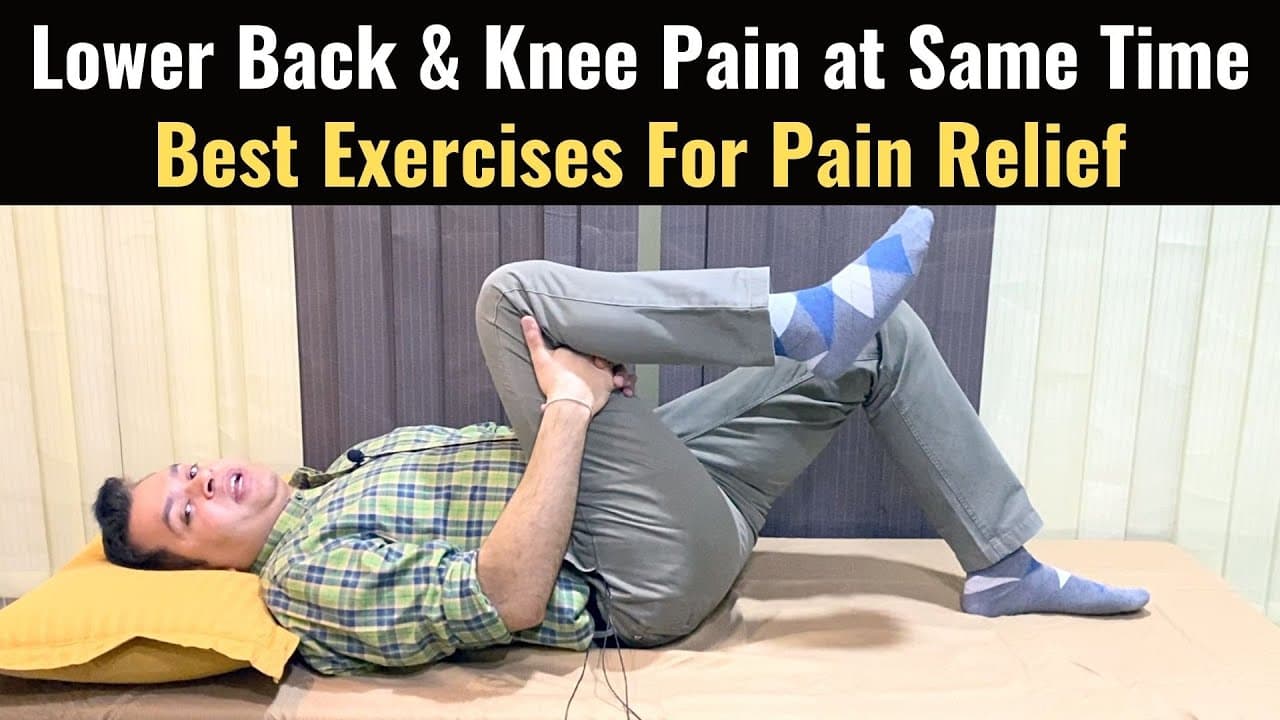
Back Pain with Knee Pain, Lower Back and Knee Pain Exercises, Knee Pain and Back Pain Treatment
Dr Varun
5 Steps for Pain Relief, Muscle and Joint Pain Relief, Joint Pain causes, Full Pain recovery
Dr Varun

ACL Ligament Surgery- Patient Testimonial | Dr. Sarthak Patnaik | Manipal Hospital Bhubaneswar
Tonse Madhava